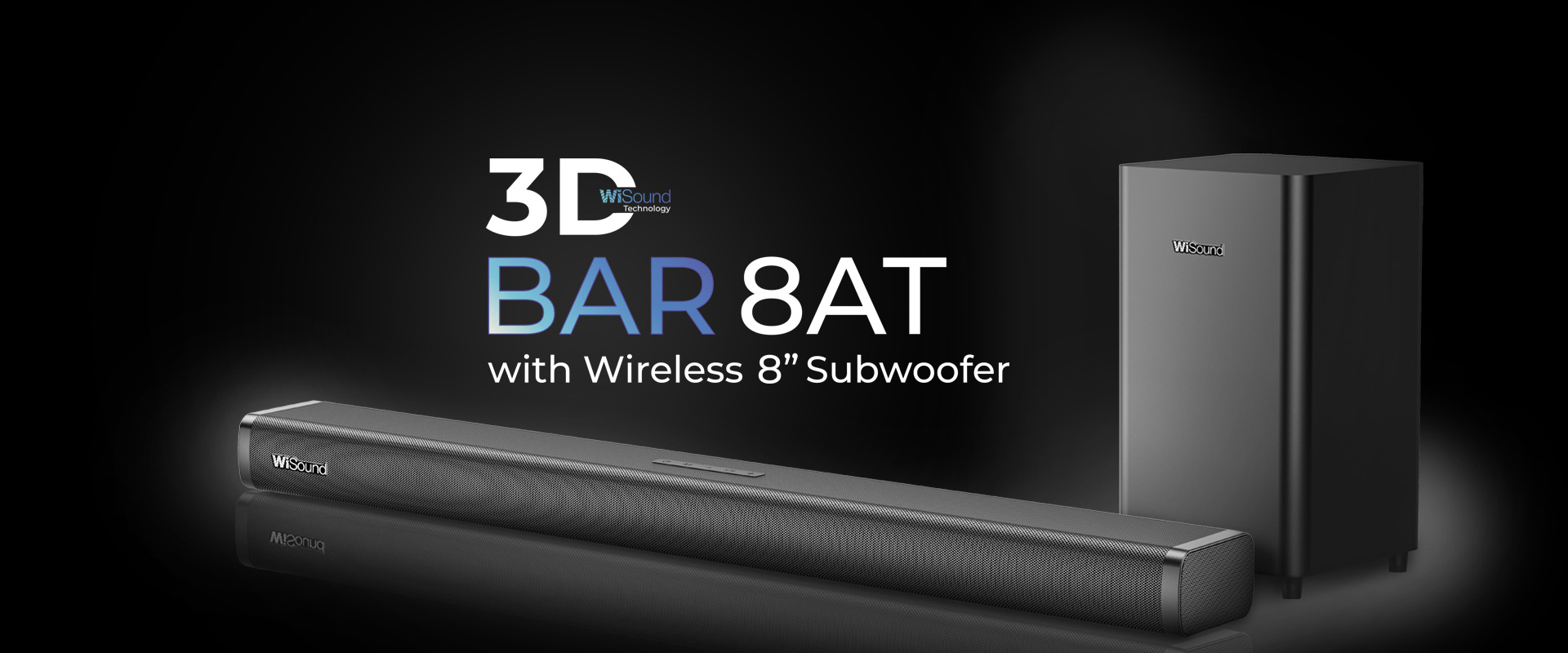

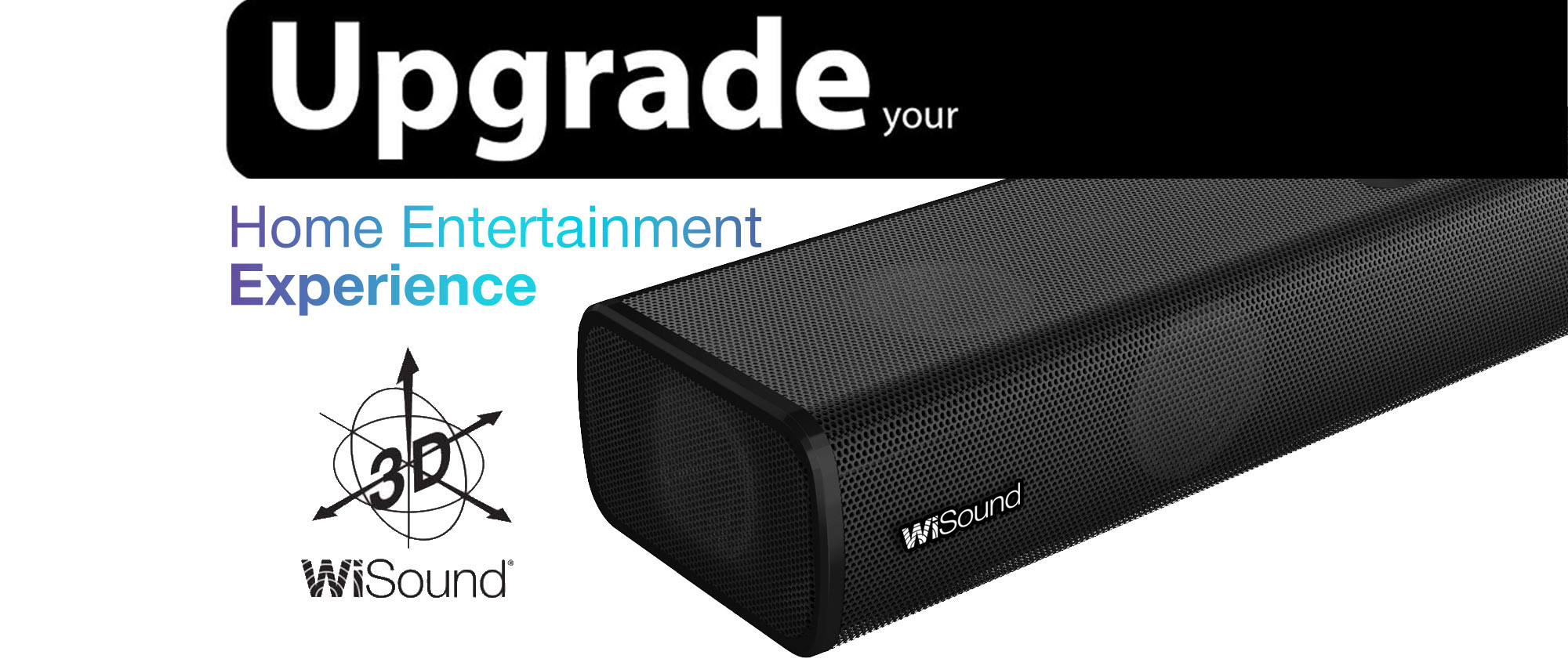



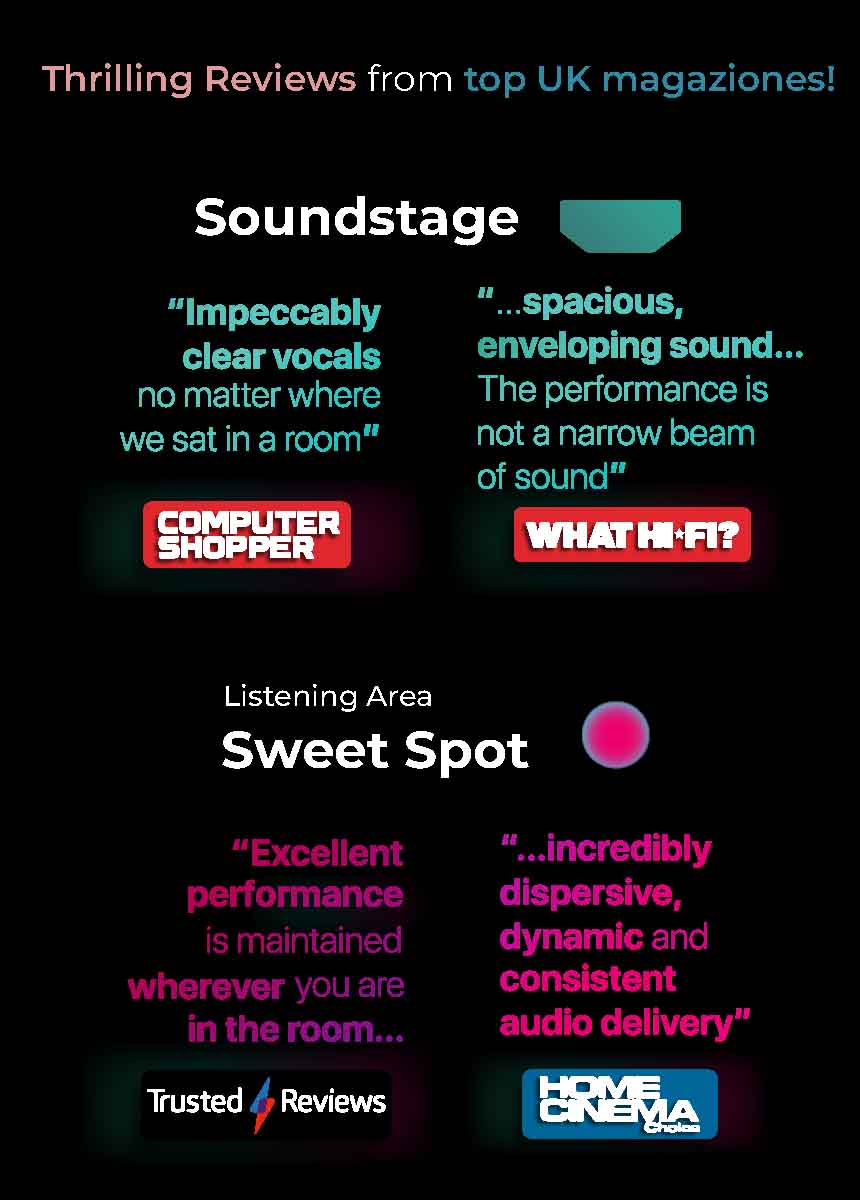

WiSound RoomFill™ 3D-360° technology
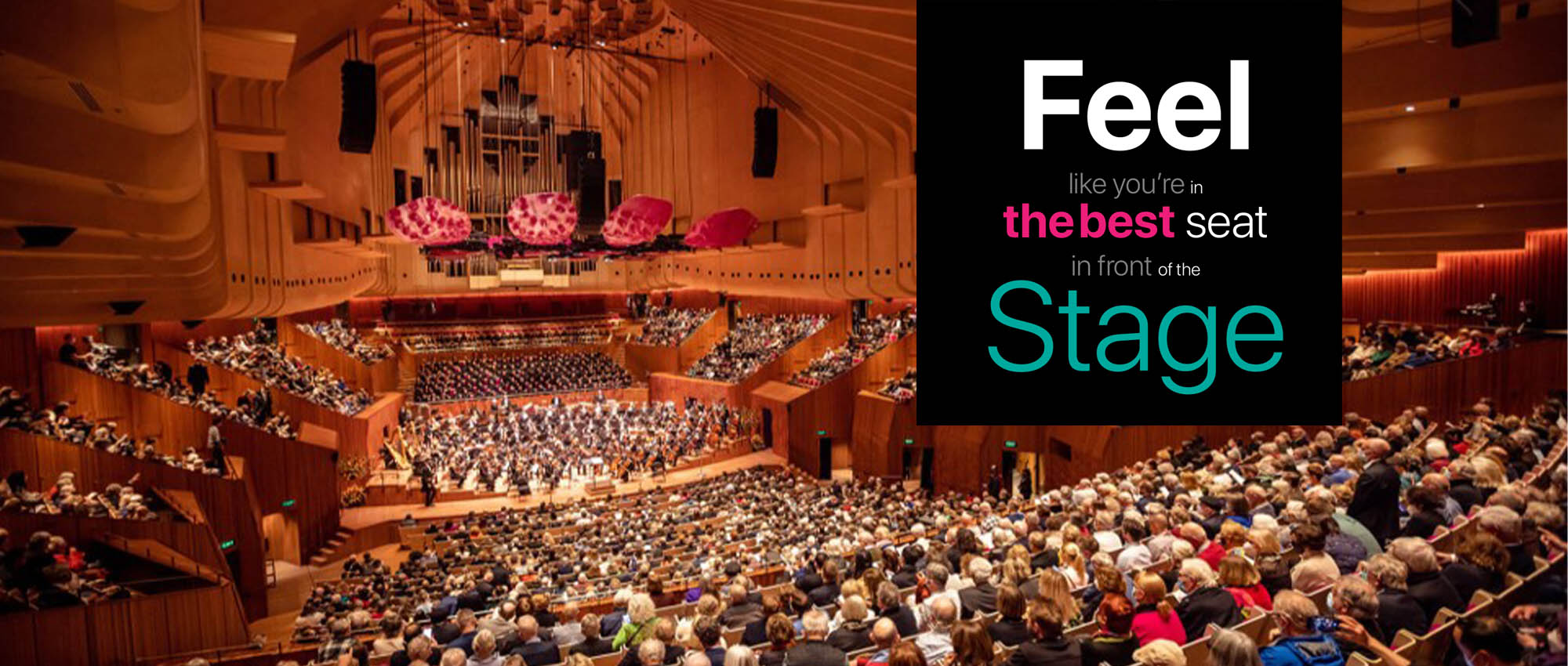
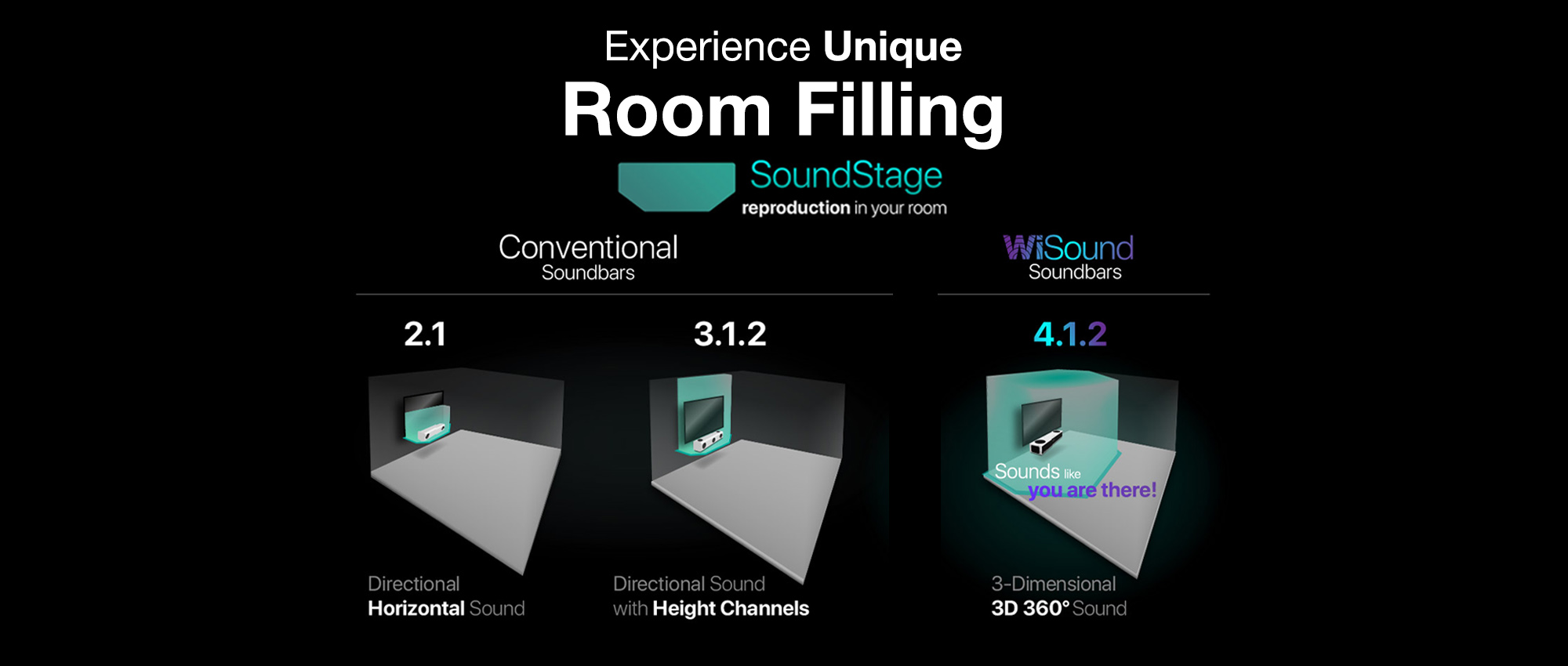
Hear a realistic Soundstage — with consistent sound everywhere in the room.
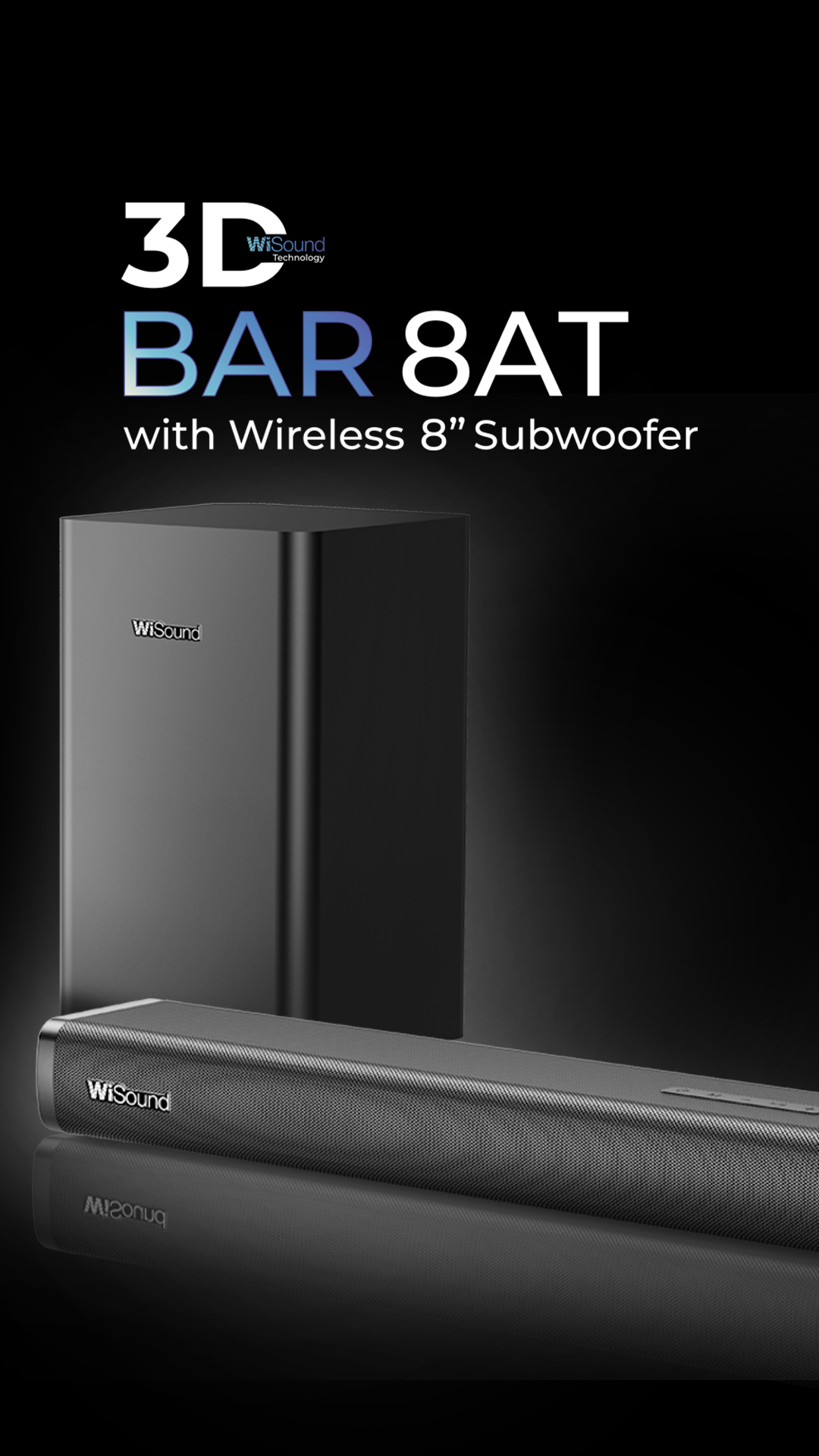
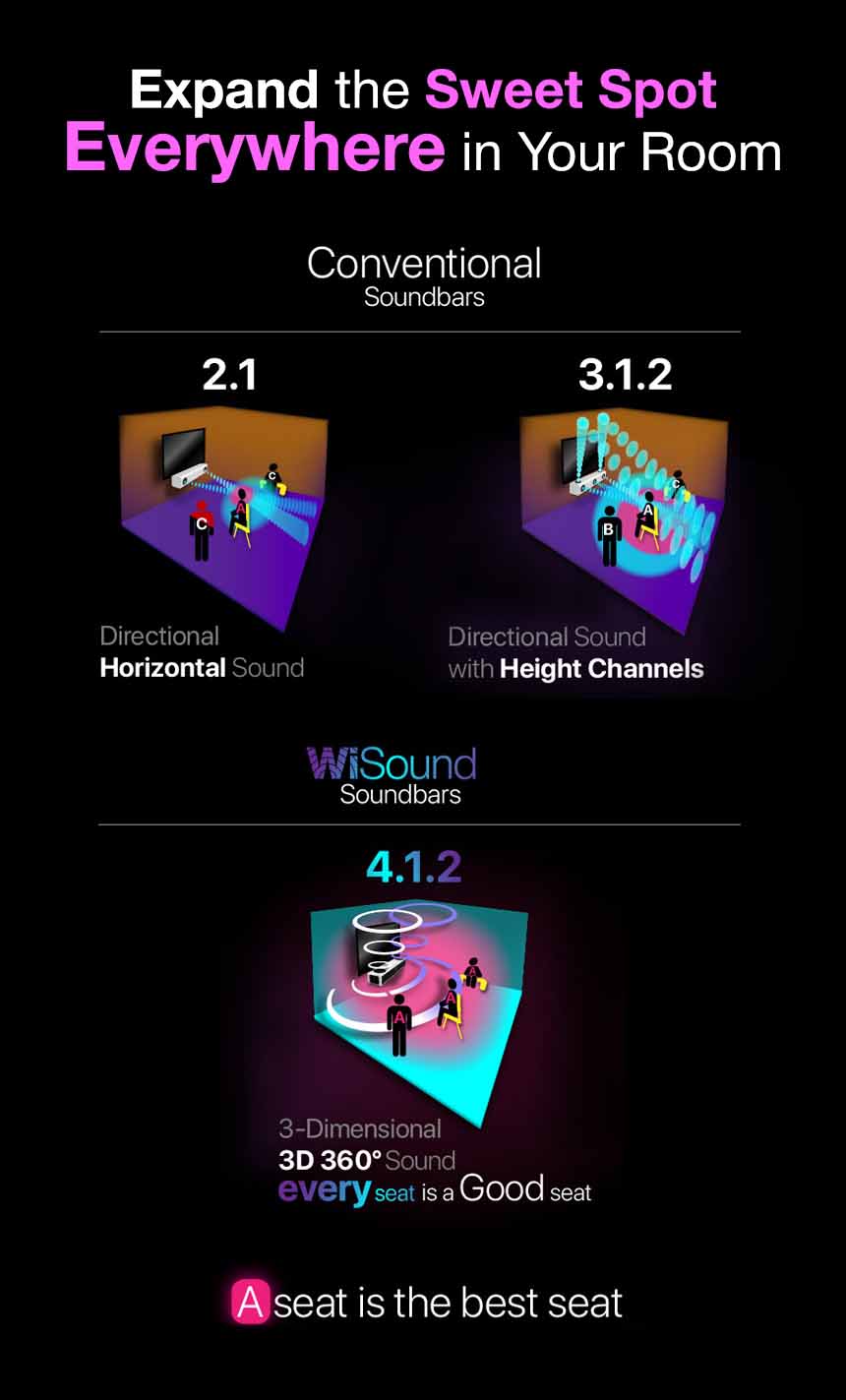
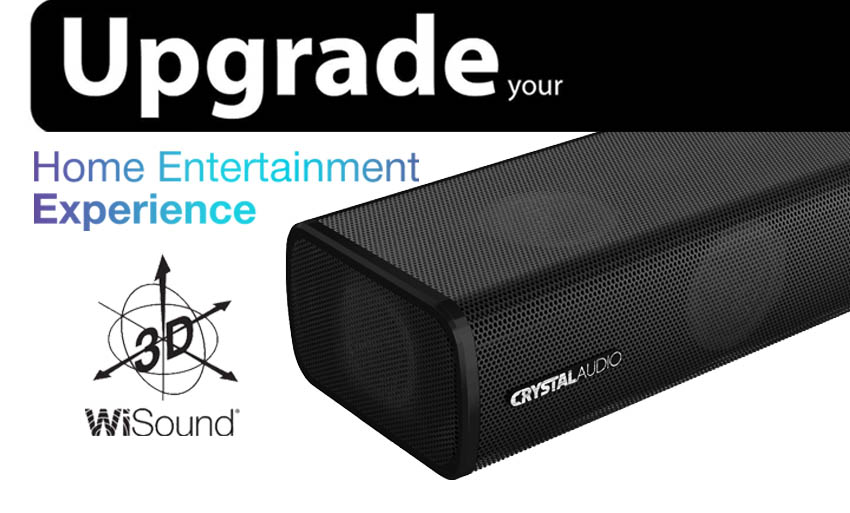
WiSound RoomFill™ 3D-360° technology gives the 3D-Bar 8AT two unique advantages:
• Realistic Soundstage. Sound gains a natural sense of space and depth — not the flat presentation of a conventional soundbar.
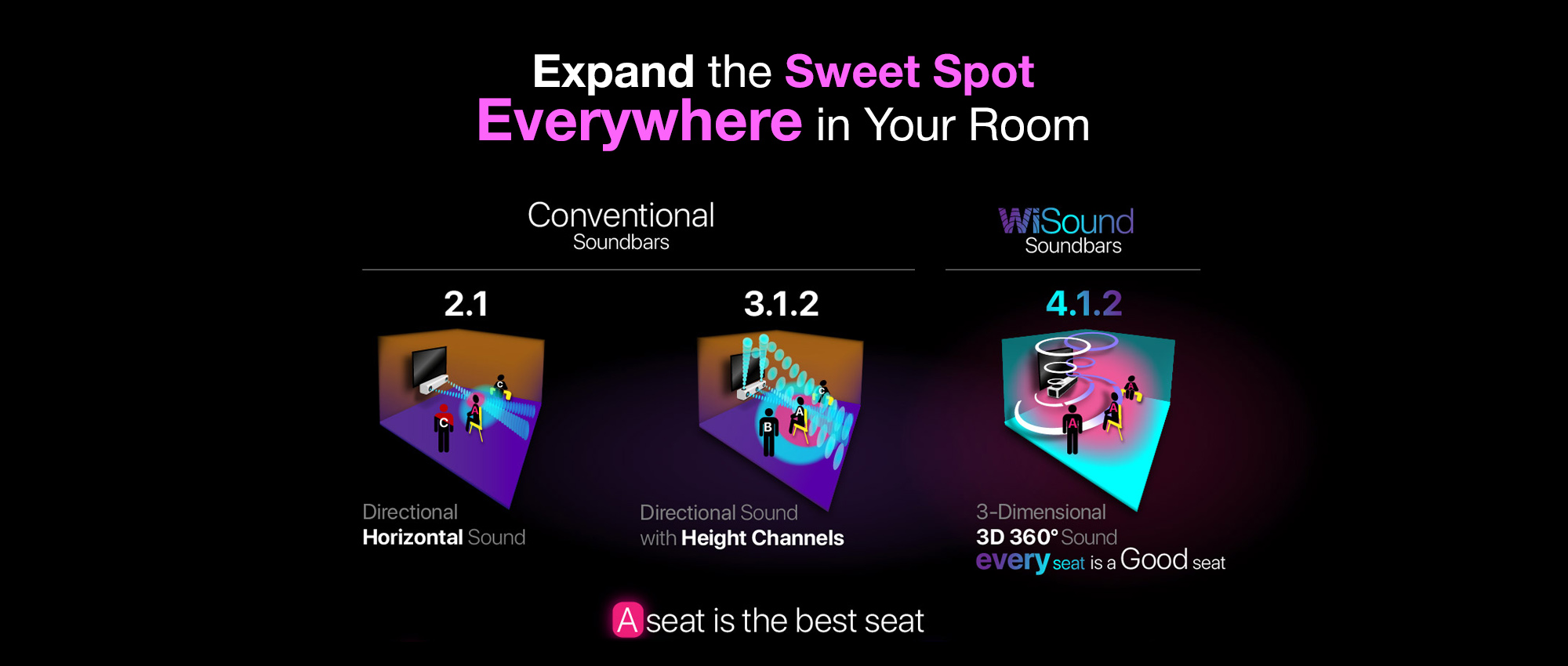
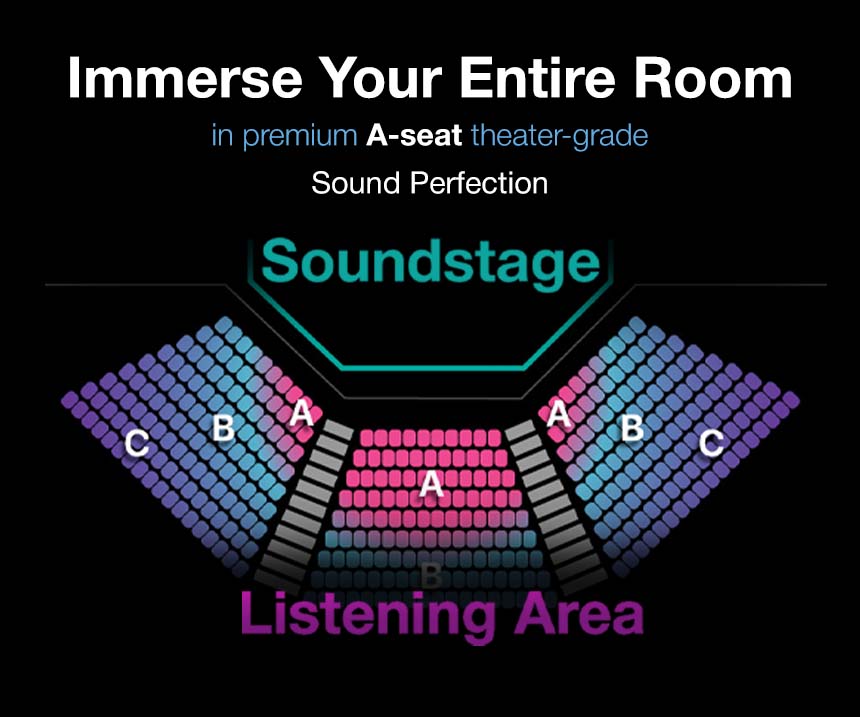
• Consistent Sound Everywhere. The experience stays uniform across the whole room, not only in a narrow sweet spot.
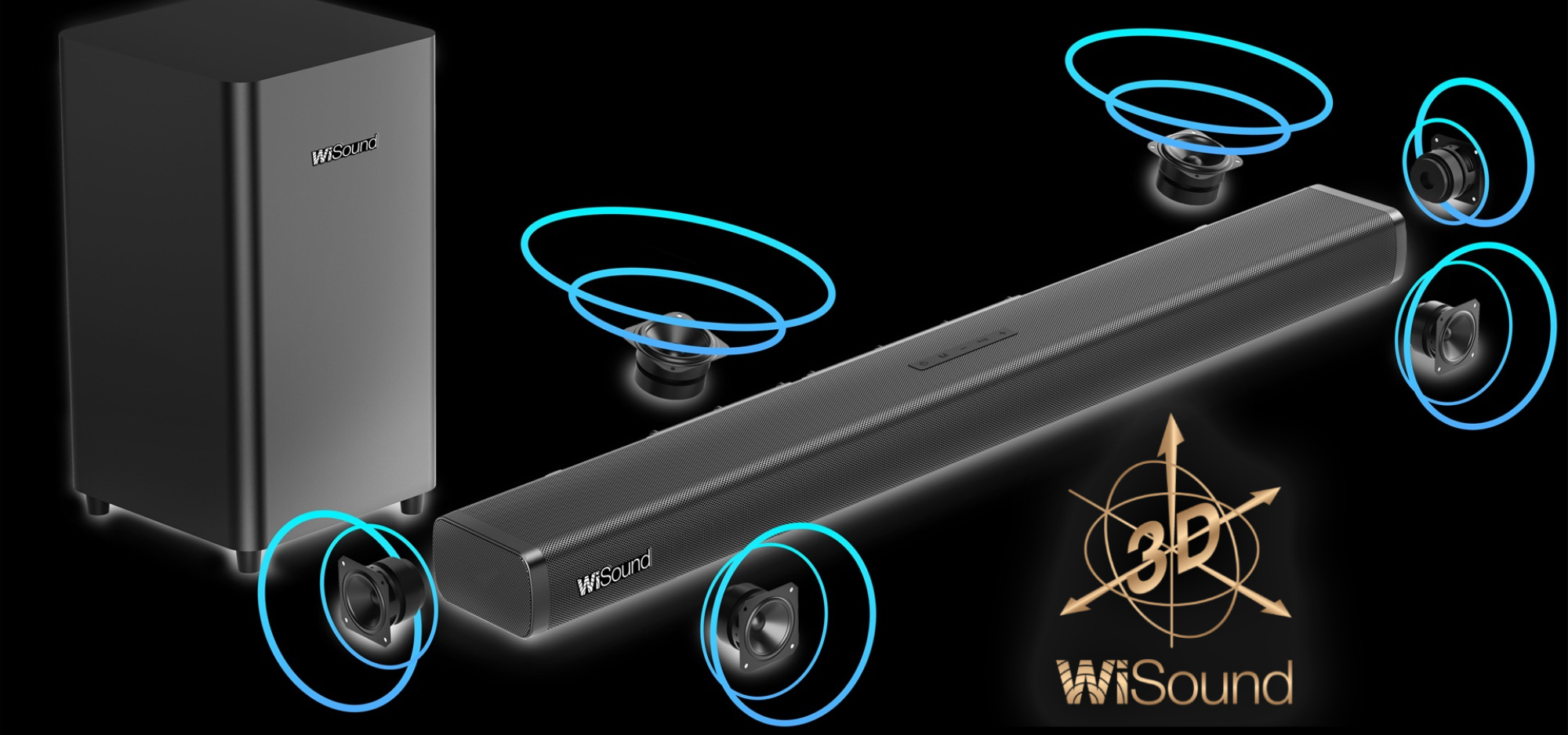
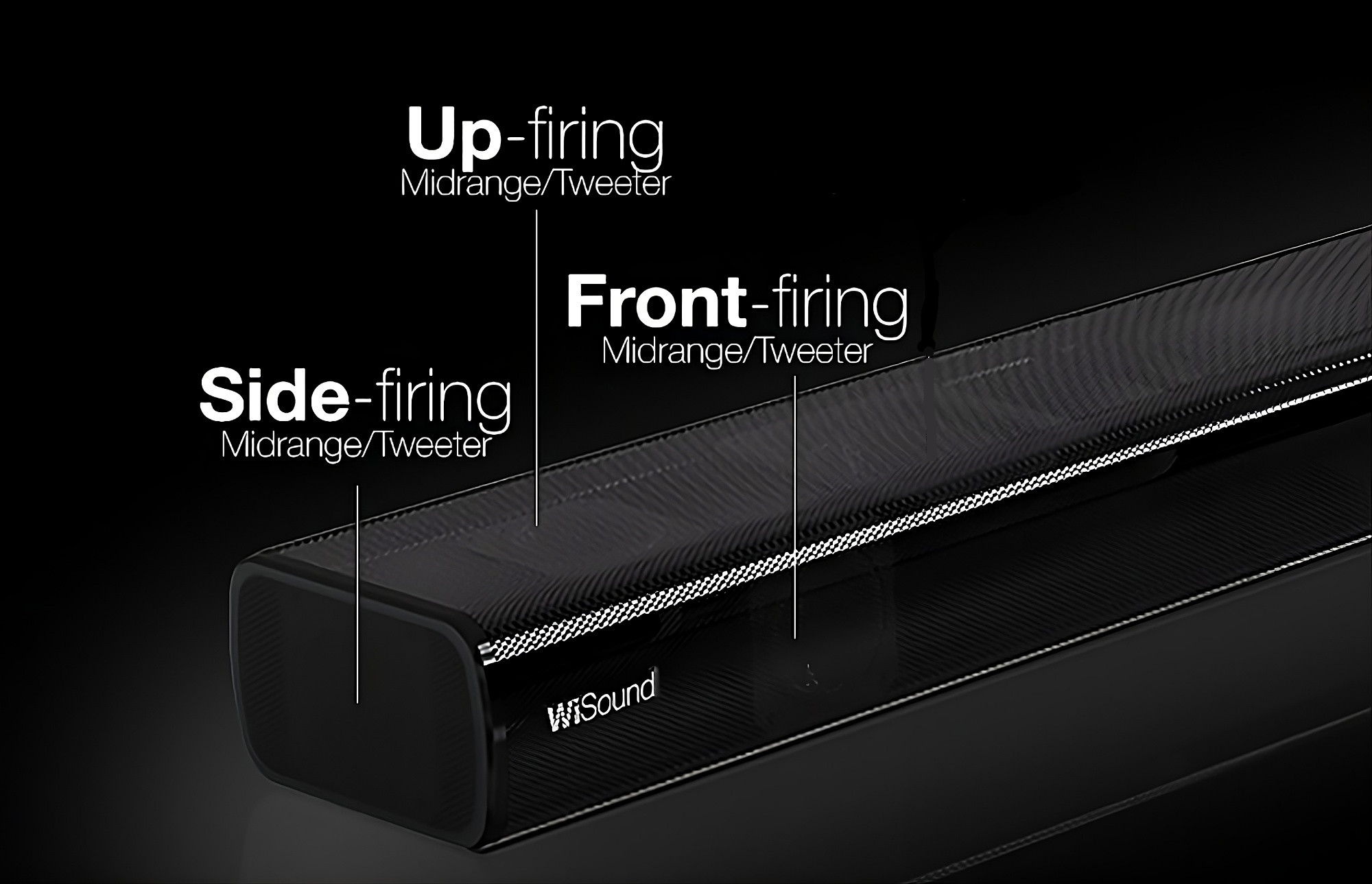
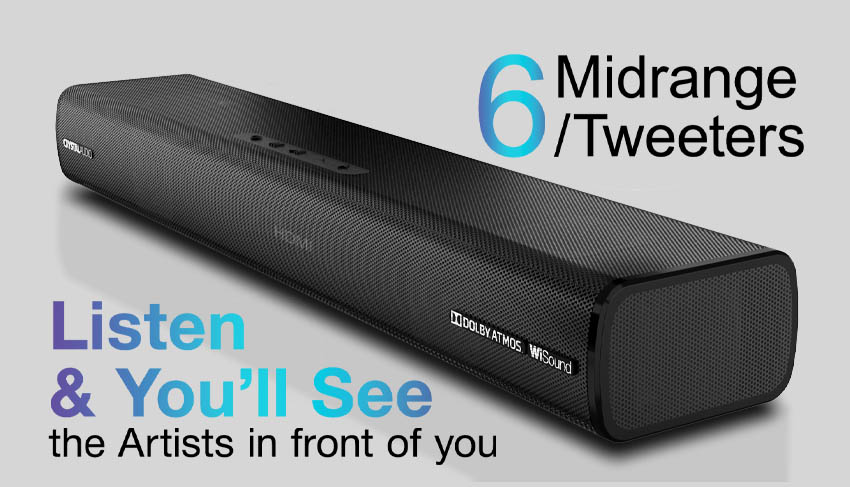
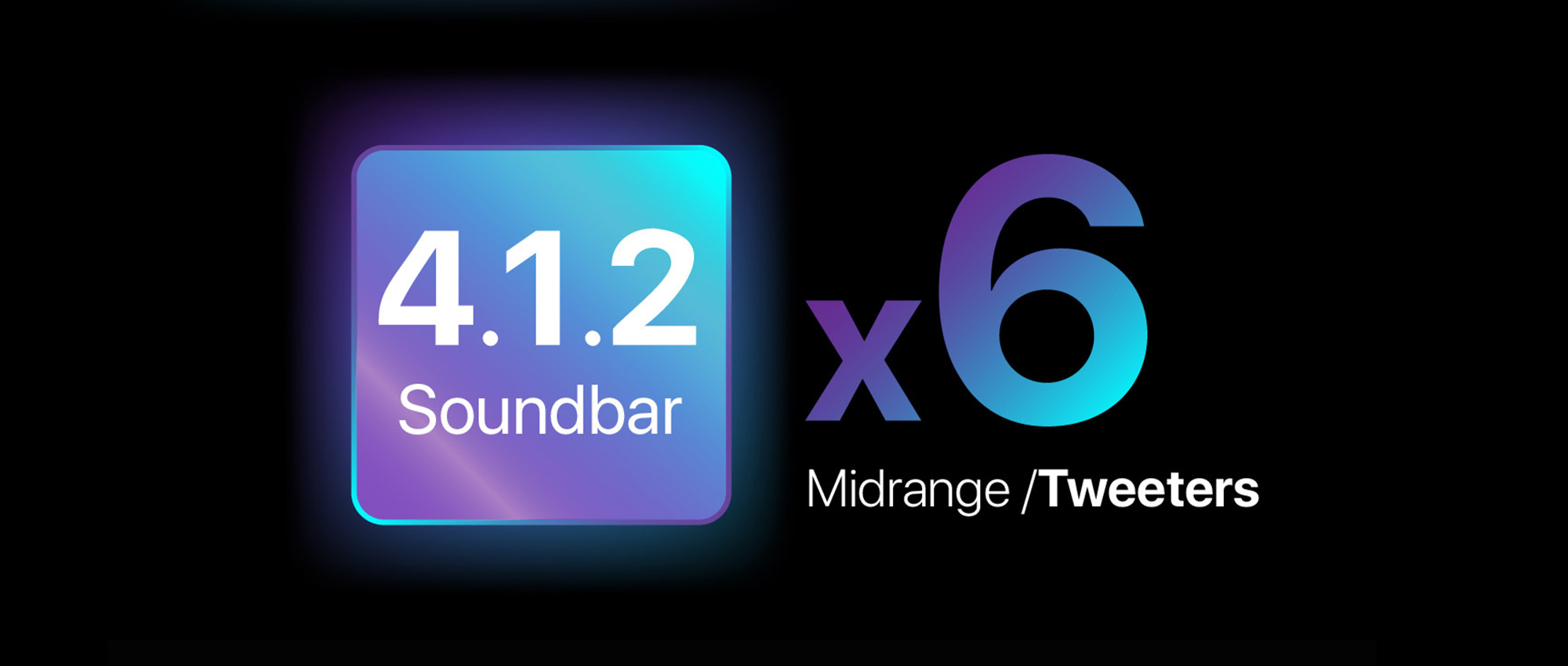
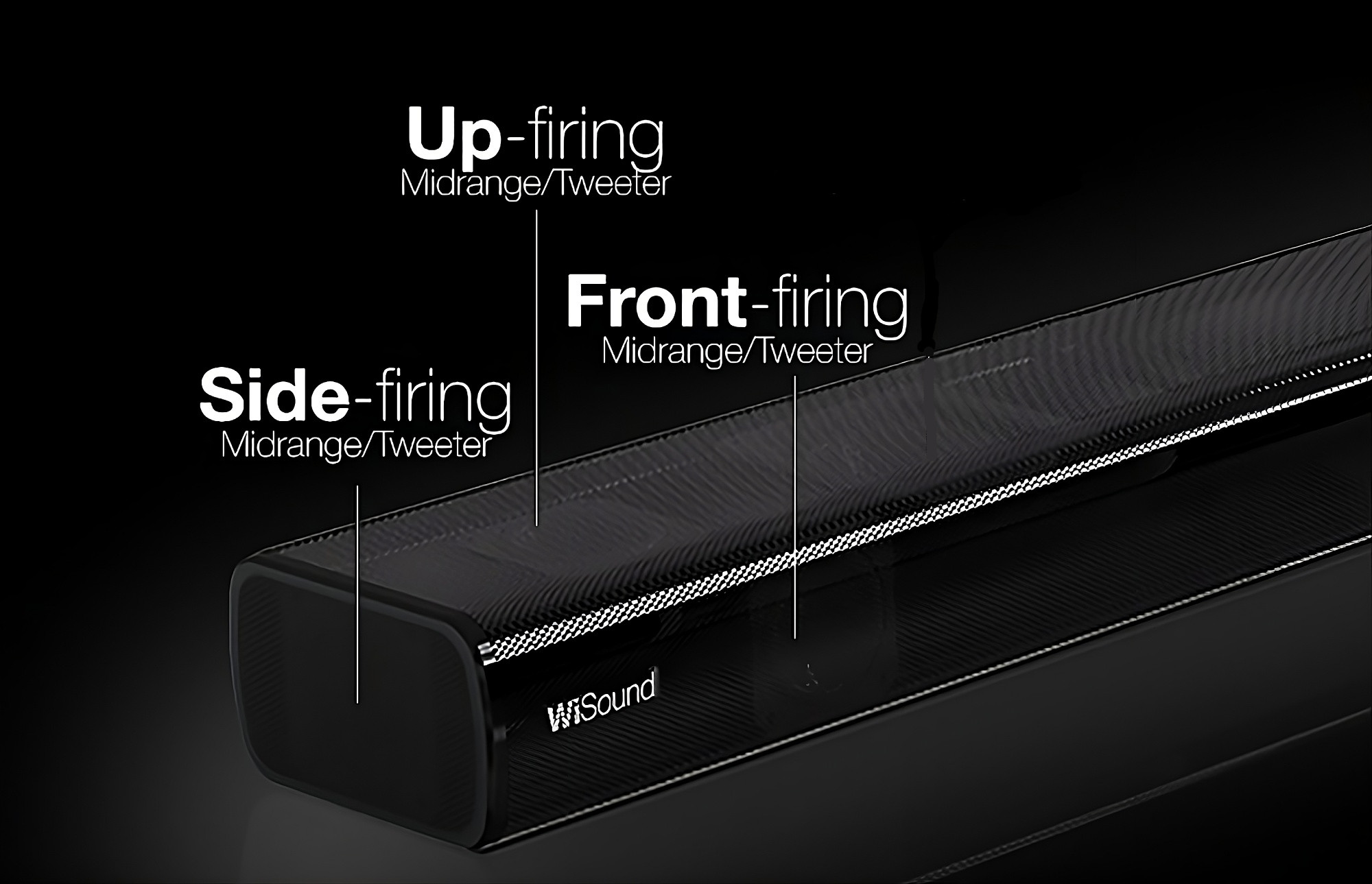
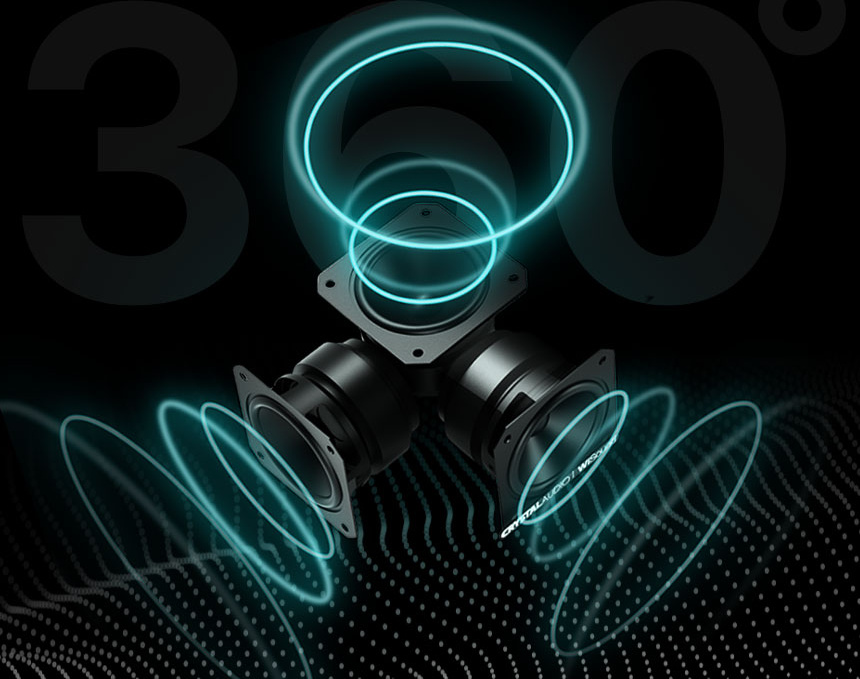
Three-Directional Speakers — 6 Drivers
Hear a large soundstage in front of you, with width, height, and natural presence.
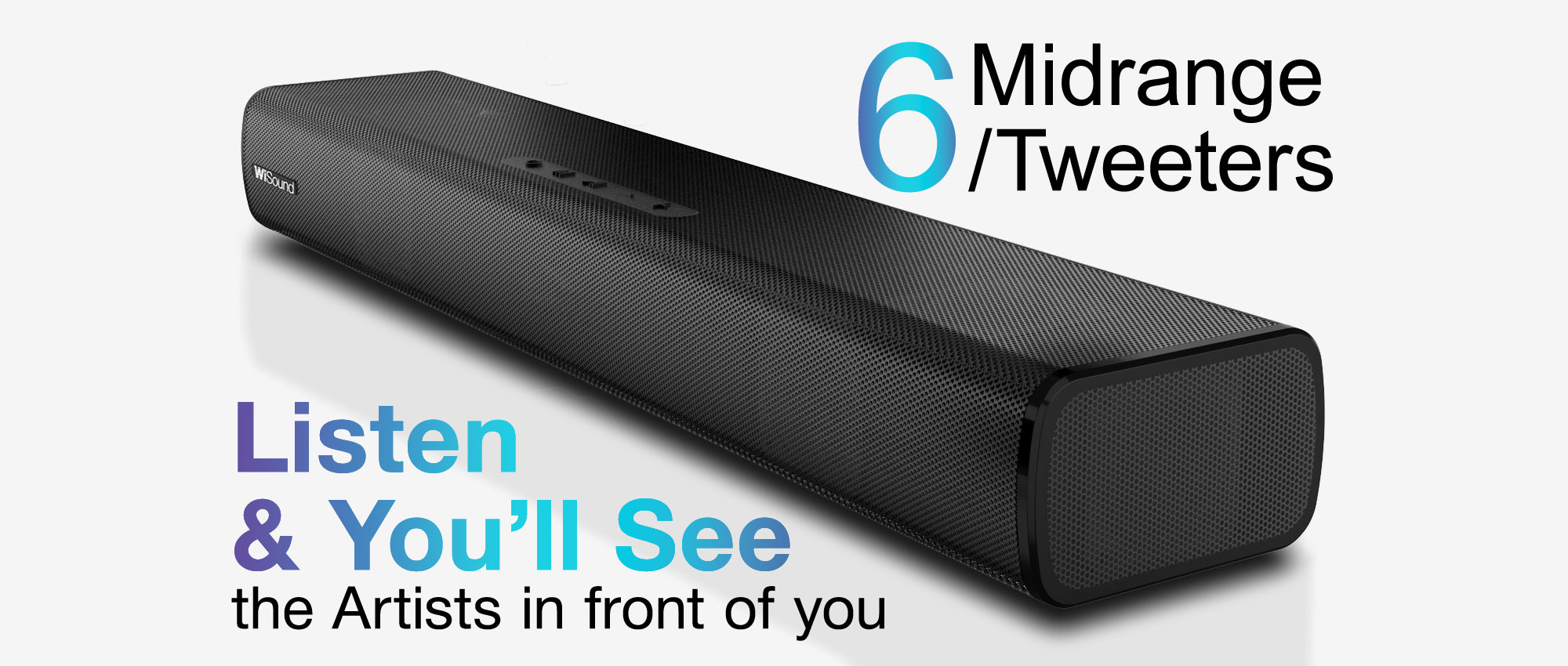
4 × 2.25″ front and side drivers + 2 × 2.5″ up-firing drivers work together so sound fills the room with detail and balance.
• The front drivers give immediate stage presence, the side drivers extend the soundstage into the room, and the up-firing drivers add realistic height for the full Dolby Atmos experience.
• The result: a vivid 3D soundstage with natural height and presence that opens up in front of you.
Room Adaptive Dynamic Equalization
Enjoy the most advanced sound experience, with 3 types of Dynamic Room Equalization:
1. 3D-360° Spherical
Room Adaptive Equalization
• natural and pleasant sound
• rich feeling of space everywhere in the room,
• without the narrow sweet spot of the conventional speakers
2. Dynamic Equalization
• full sound with dynamic Bass
• automatically adjusted
• even at very low Listening Levels
3. Reflections Gain Equalization
• Listen without Distortion
• without reflection colorations from walls and furniture
WiBass™ — Deep & Powerful Bass
WiBass™ Smart Bass DSP keeps bass deep, clean, and controlled at every volume.
• At low volume, bass stays full and present.
• At high volume, WiBass™ helps control distortion, so movies, games, and music keep their impact without overloading the room.
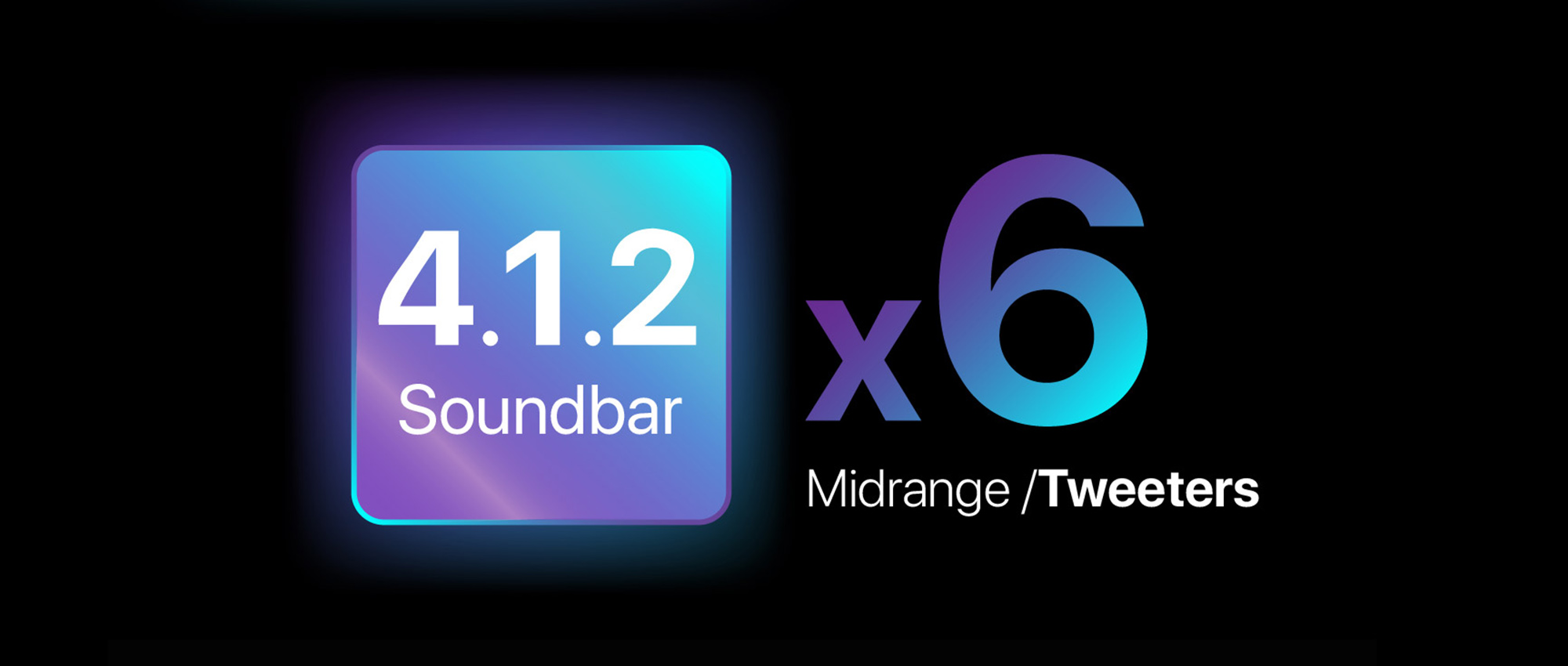
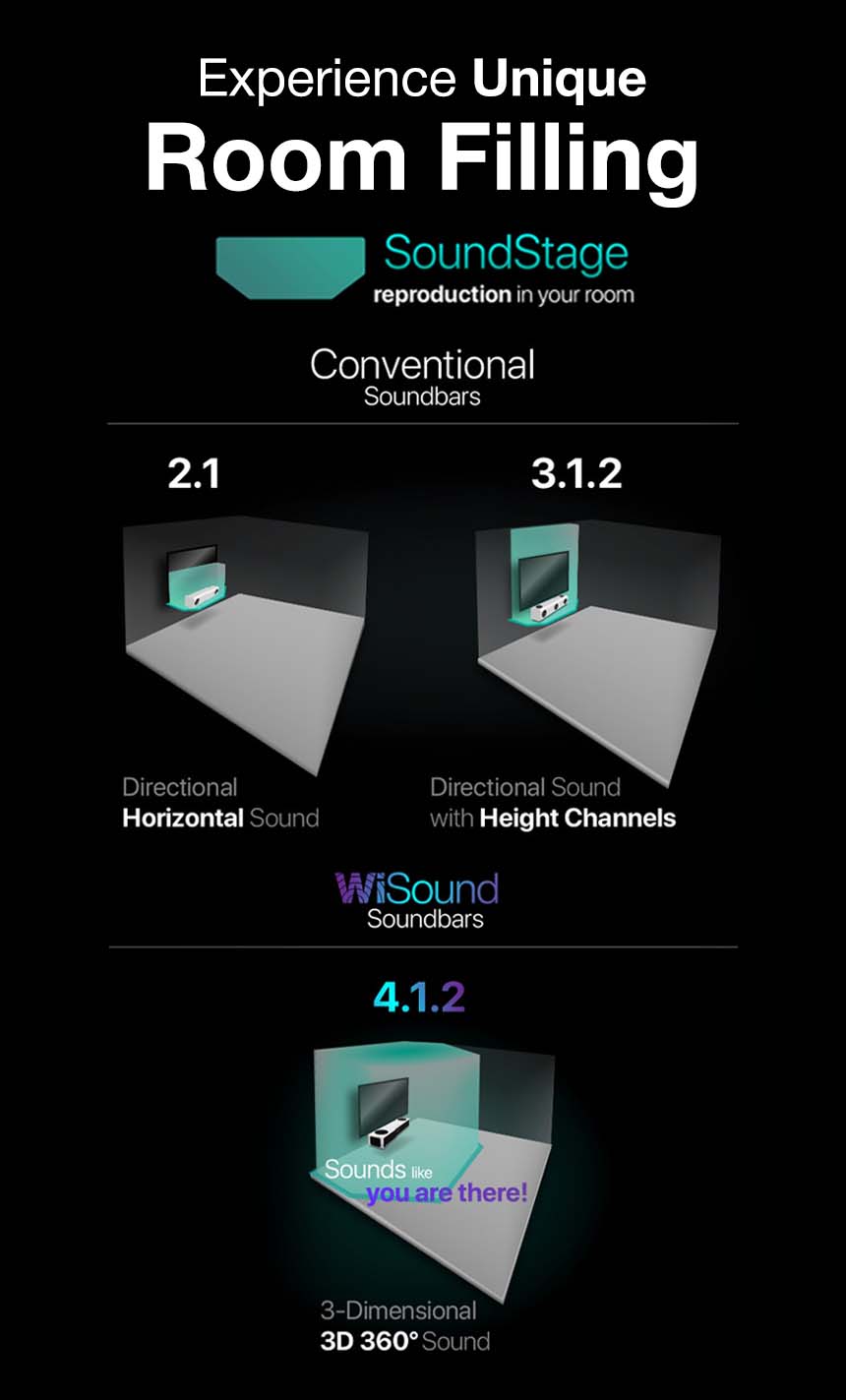
4.1.2 Channels
Enjoy superior acoustic experience than the common 3.1.2 and 2.1.2 soundbars with height channels.
4: refers to the number of traditional surround speakers (front. center, surround)
1: refers to the number of powered subwoofers
2: refers to the number of up-firing speakers
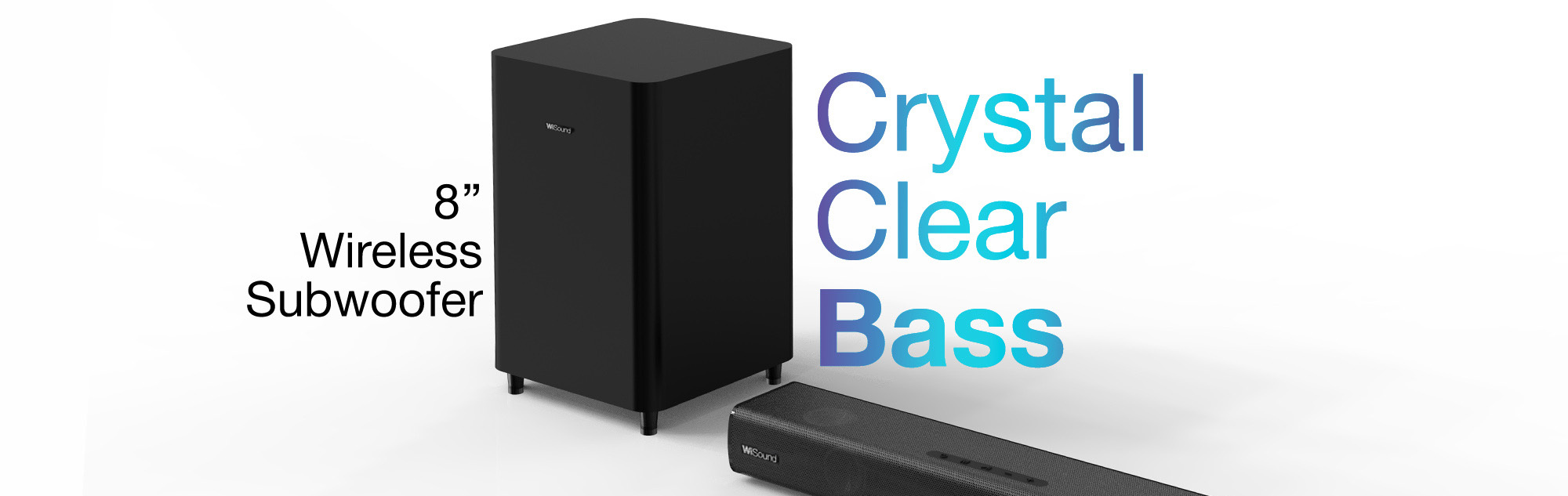
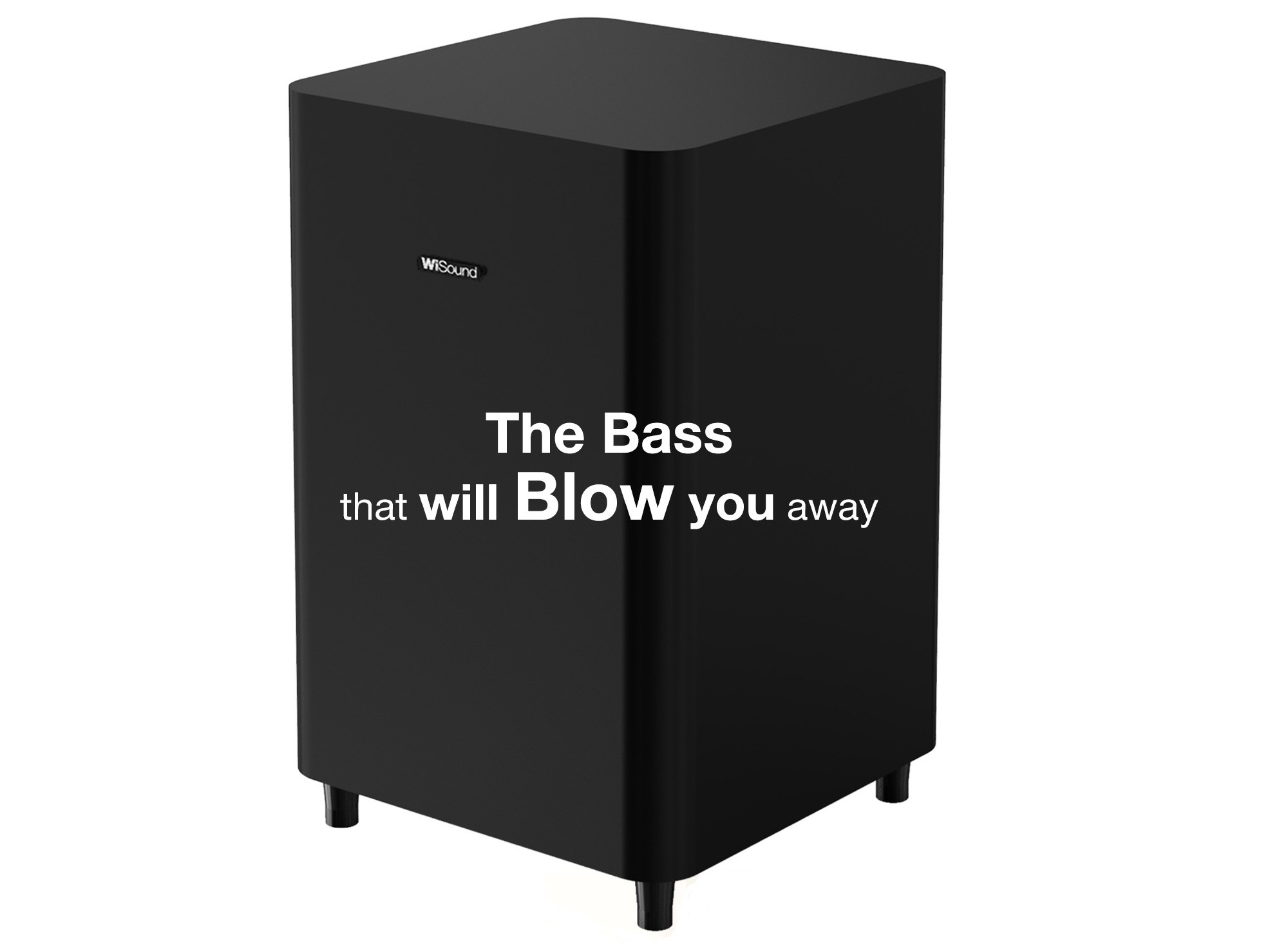
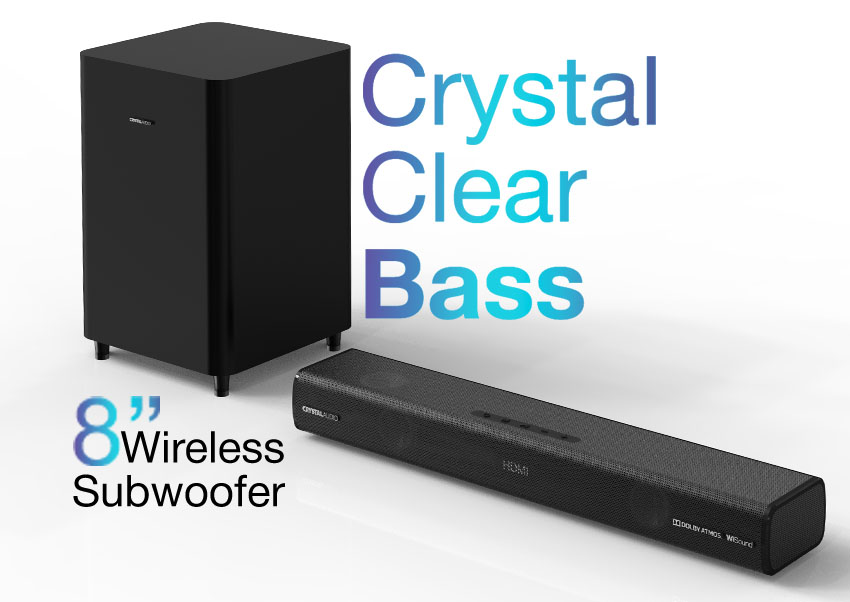
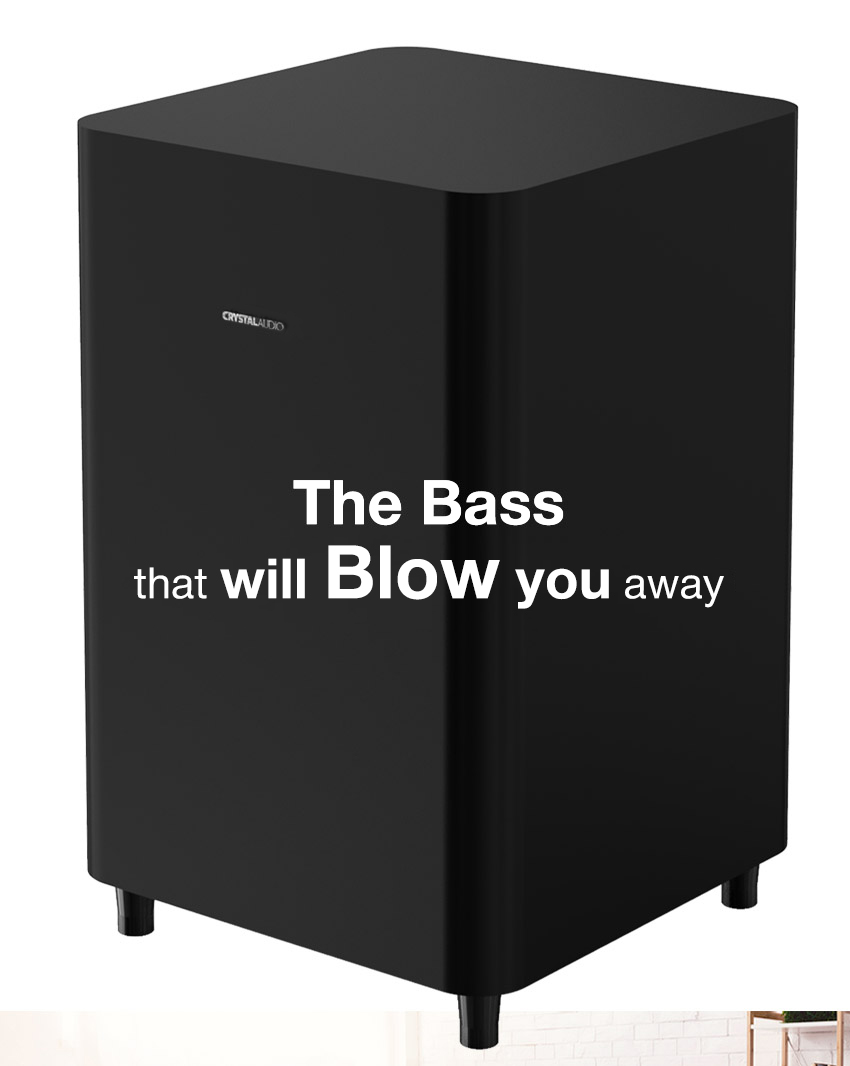
Wireless 8″ Subwoofer
Hear and feel deep bass down to 30 Hz — without cables, with placement freedom.
The 8″ wireless subwoofer moves over 2× more air than a typical 6.5″, for deeper, more powerful bass that fills the room.
- Because it's wireless, you can place it wherever fits your space best — beside the cabinet, in a corner, or further back for an even bigger effect.
- It works seamlessly with the soundbar through WiSound DSP for an even, balanced response across the entire frequency range.
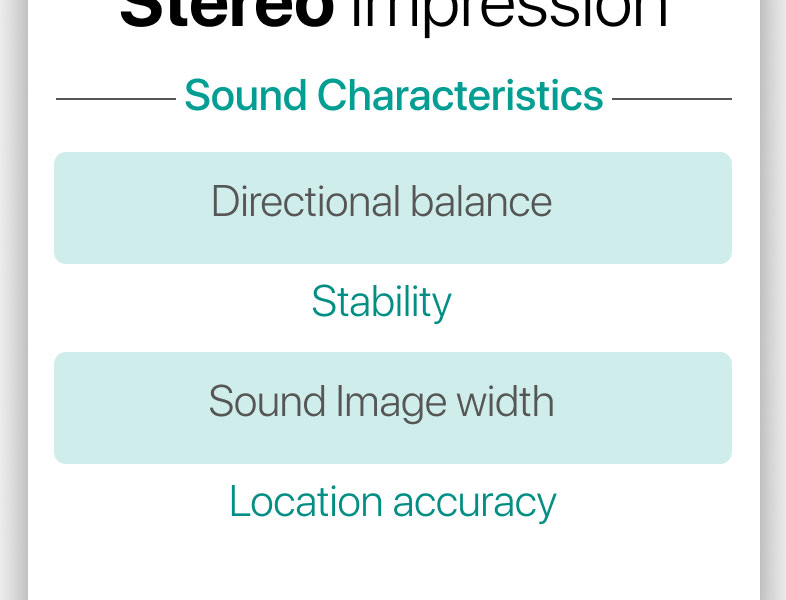
Spatial Impression - Realistic Soundstage
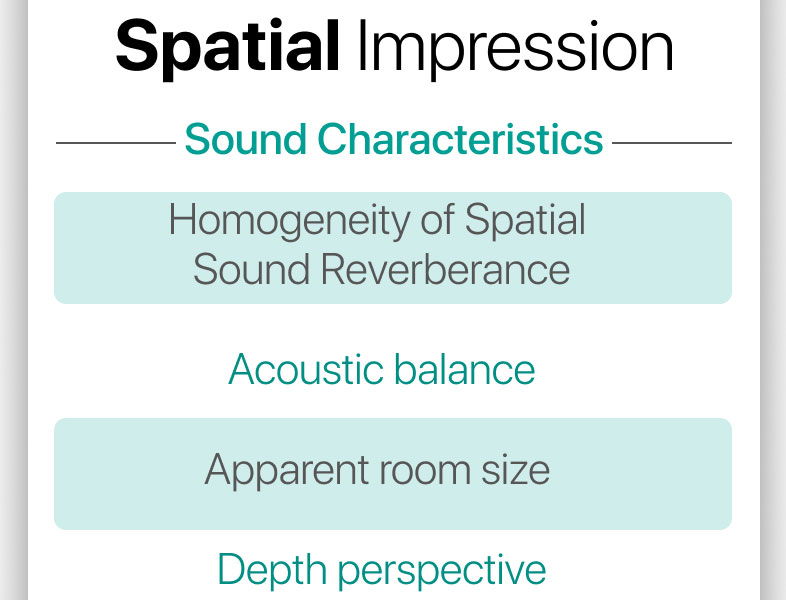
The performance appears to take place in an appropriate spatial environment
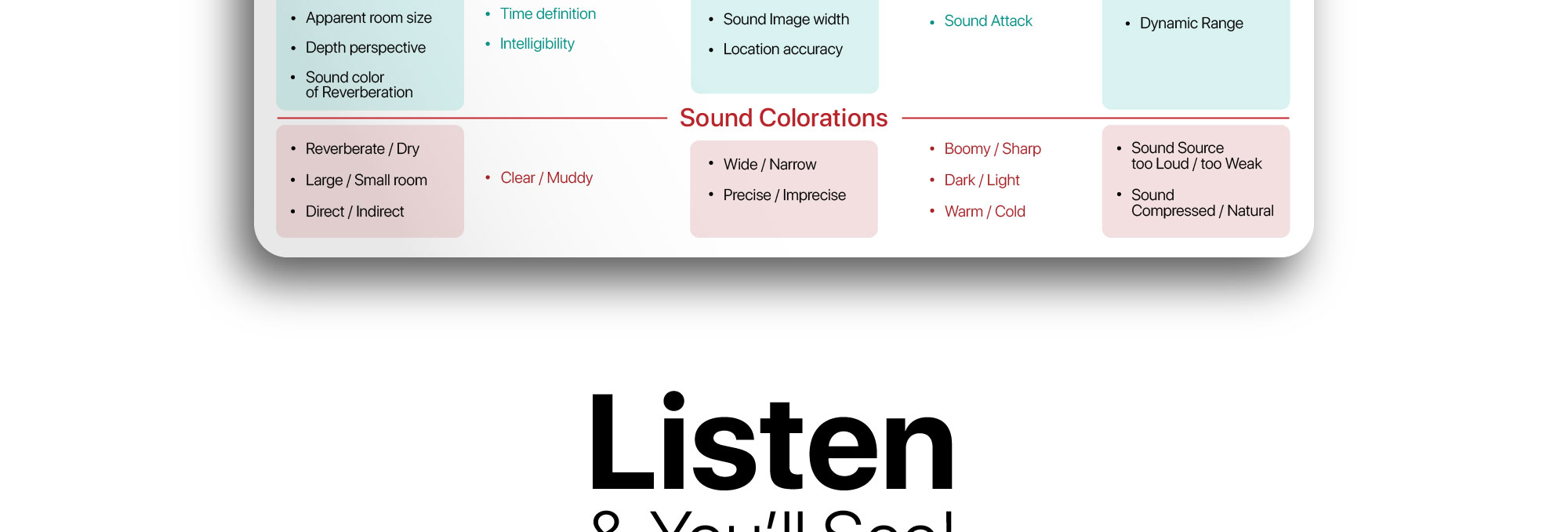
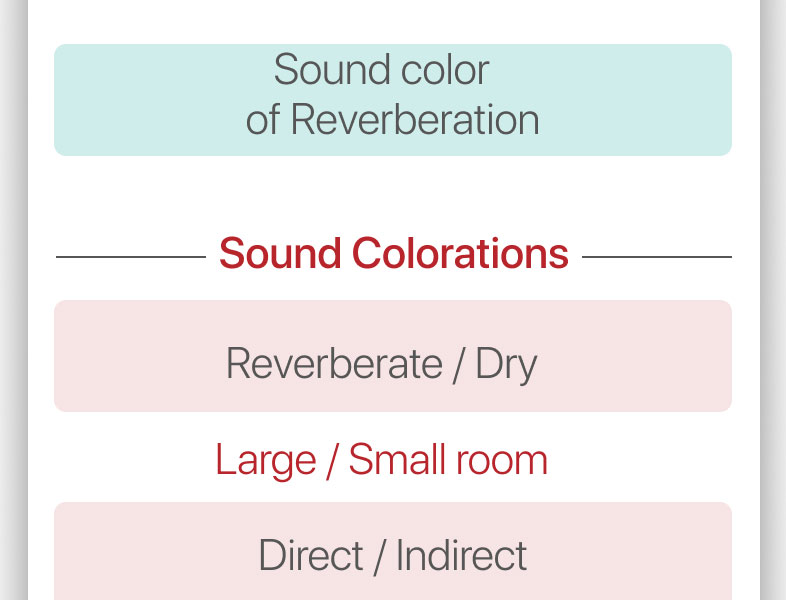
Experience Homogeneity of Spatial Sound Reverberance, Acoustic balance, Apparent room size, Depth perspective, Sound color of Reverberation.
Examples of common descriptive terms: Reverberate /dry, Large/small room, Direct/indirect.
Enjoy and share our SPATIAL IMPRESSION PLAYLIST* on TIDAL and SPOTIFY: https://www.crystalaudio.com/eur/playlists#spatial-impression
*Test your Headphones and Speakers with the Best Tracks, selected by Crystal Audio engineers, and based on ITU-R BS.1284-2 (01/2019) International Standard.

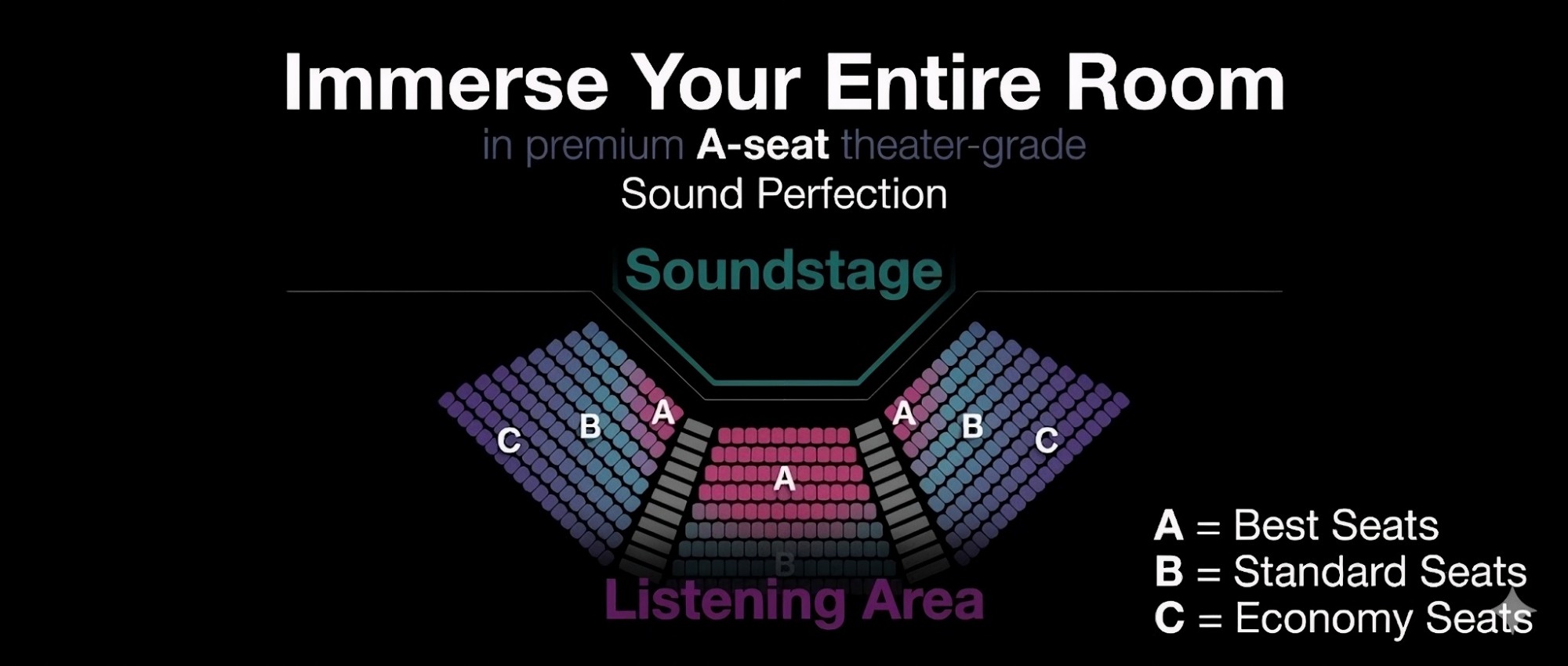
Perfect Sound Everywhere in the Room
Enjoy rich, natural, and perfectly balanced sound — wherever you sit.
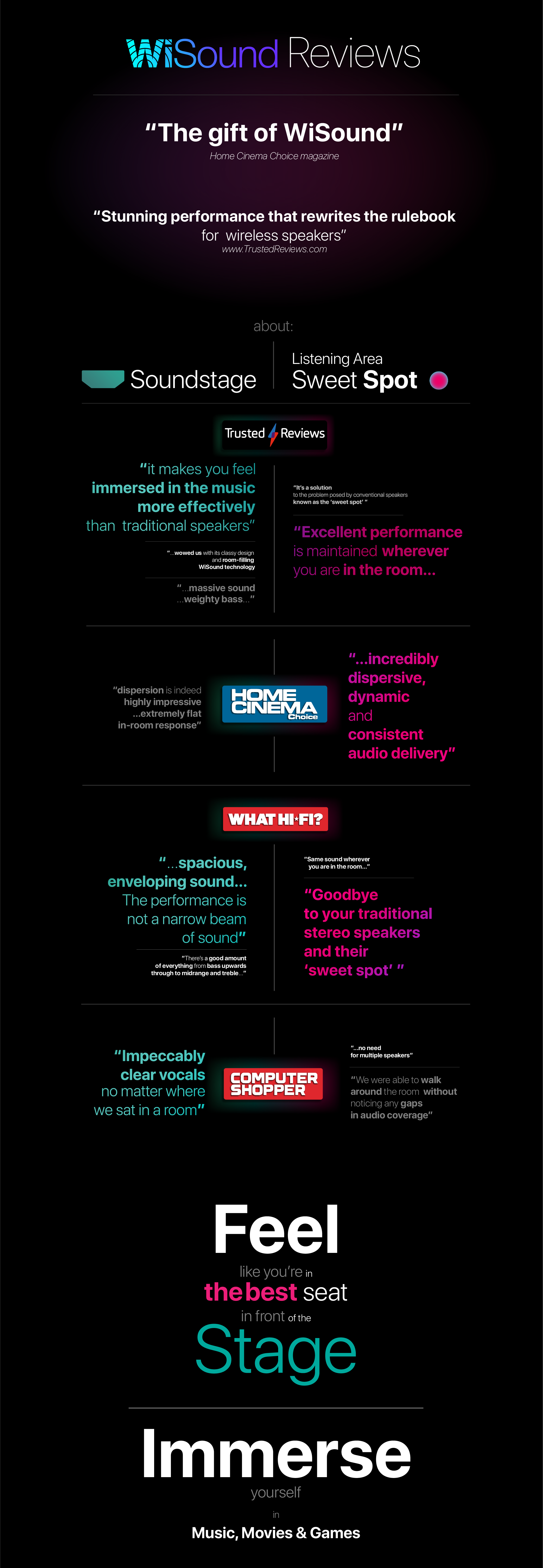
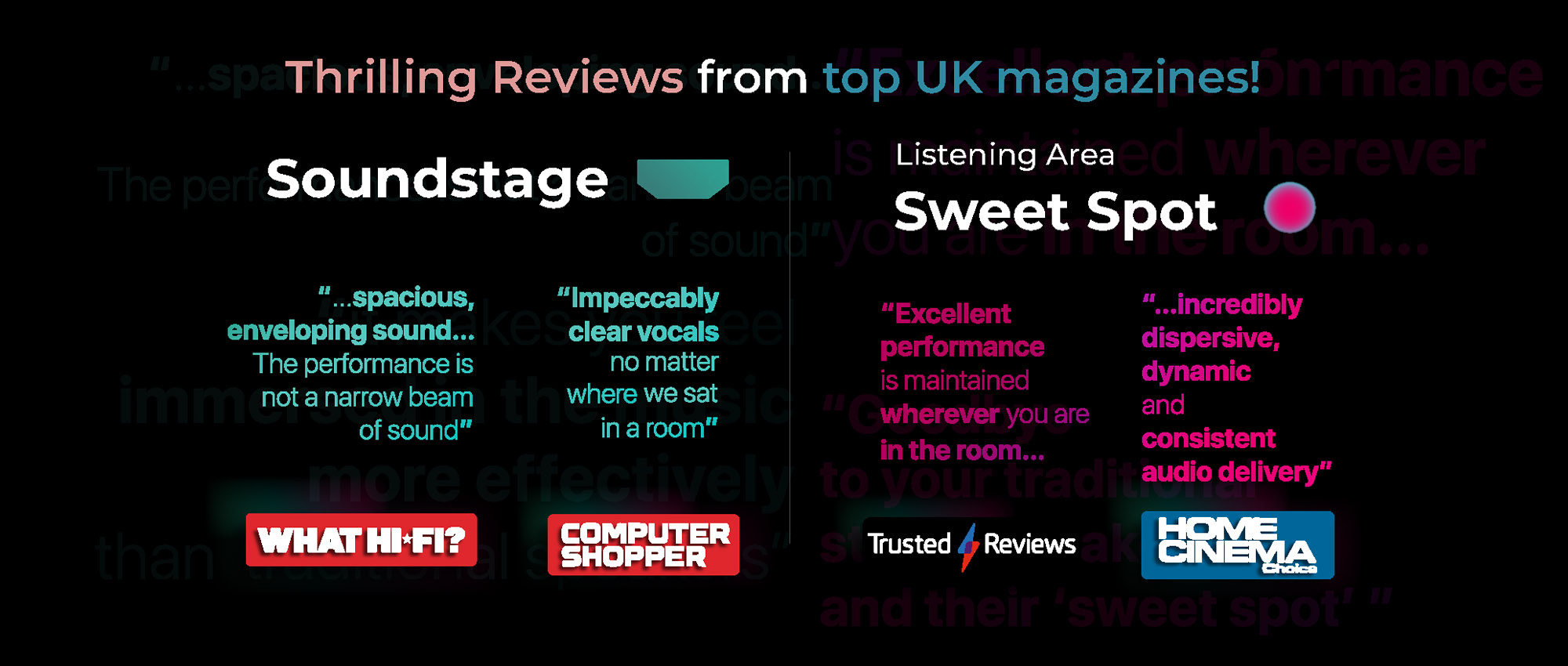
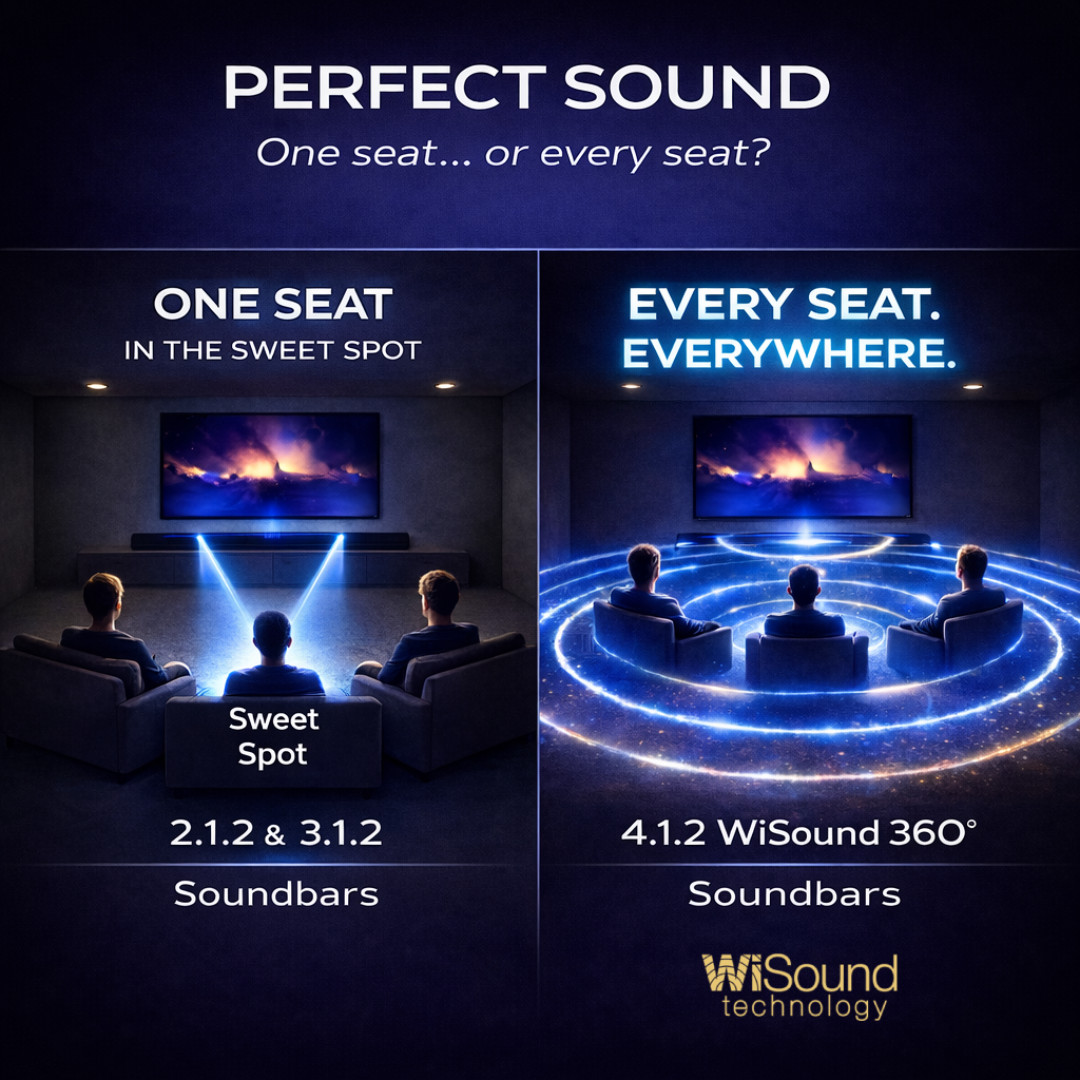
• WiSound technology expands the traditional "Sweet Spot" to the entire room, projecting sound evenly in 360°.
• Sound creates natural reflections to enhance clarity, depth, and realism.
• The result is a spacious, lifelike, and dynamic soundstage — with perfect sound everywhere in the room.
Sweet Spot
Hear clear, balanced sound across the whole room — not only in one “perfect spot.”
Every recording is mixed in a studio. The engineer sits at one precise position, at the center of an acoustically optimized room. That position is called the sweet spot. Your living room is not a studio, and not everyone on the couch sits in the same place.
Traditional audio systems with speakers spread across the room reproduce that feeling only in a narrow zone. Even the most advanced virtual-stereo and virtual-surround systems are very sensitive. A few centimetres off and the balance is gone.
It is true that no soundbar and no single speaker can match, at the sweet spot, the stereo image of a pair of top-class monitor speakers placed far apart at the corners of a triangle with the sweet spot. But with WiSound RoomFill™ and 4.1.2 channels, the 3D-Bar keeps the stereo image stable and natural — for everyone in the room, not just one listener.
(No playlist link — per L2.16, Stereo Impression / Imaging playlist reserved for stereo-pair products.)

Deep & Powerful Bass
Enjoy impressively deep Bass that brings out all low-end frequencies from movie sound effects to lively music tracks
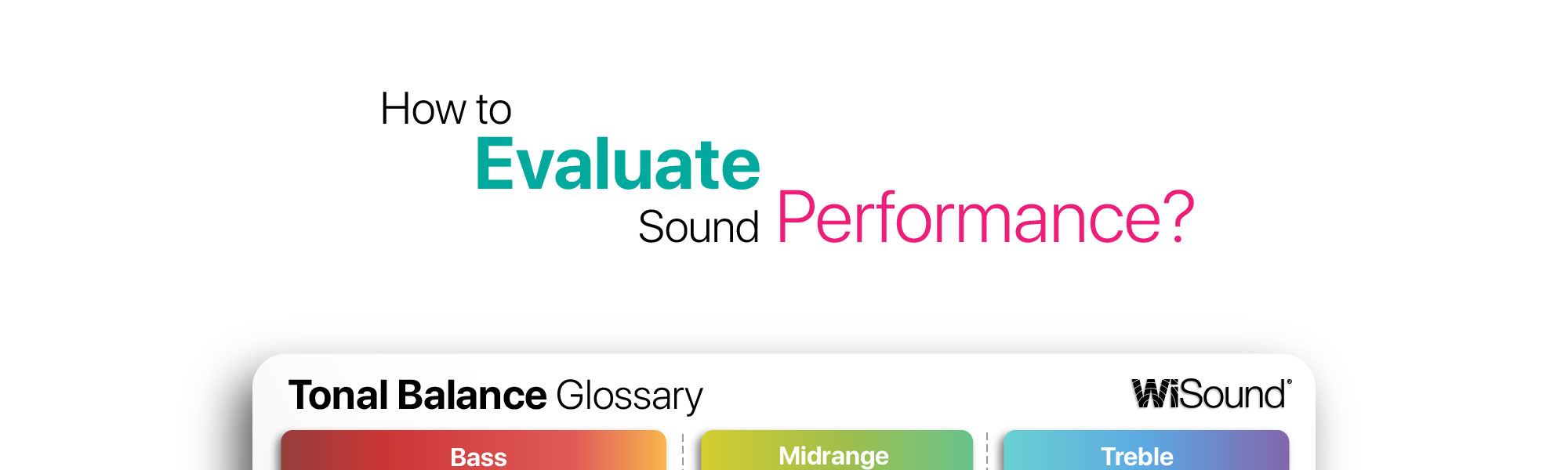
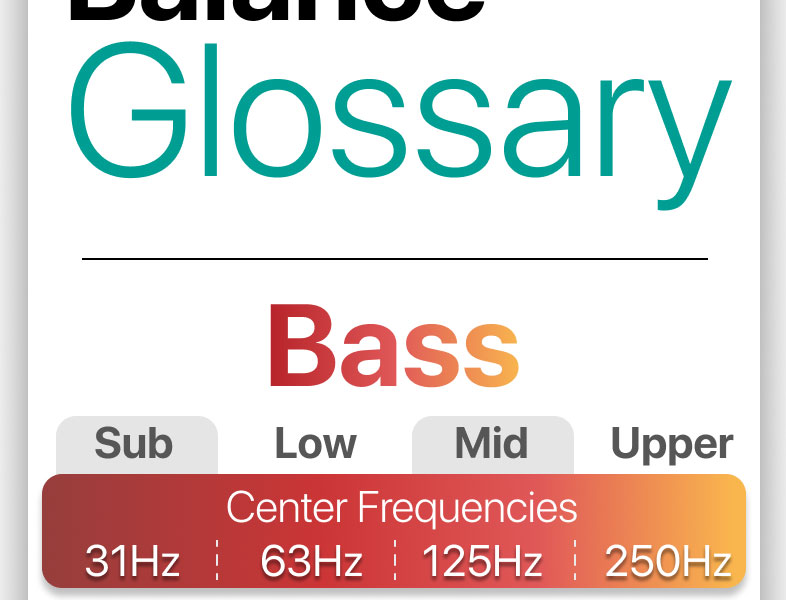
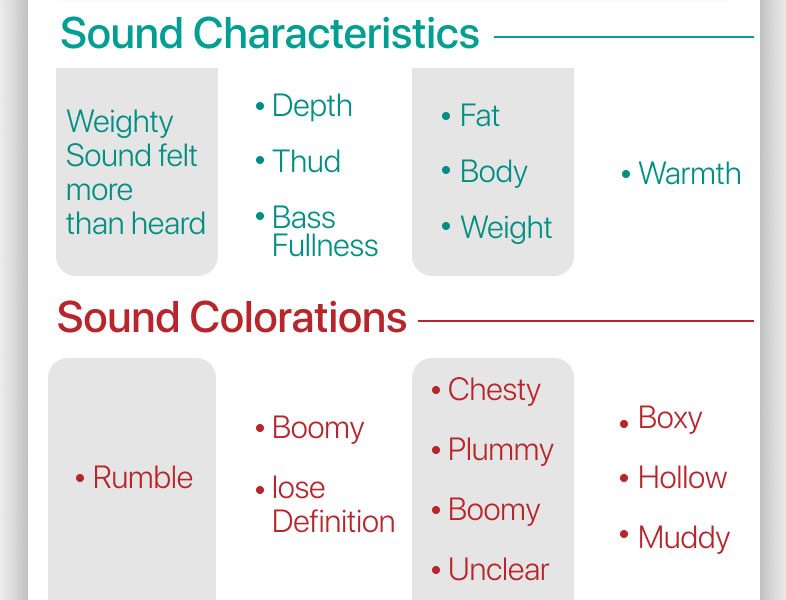
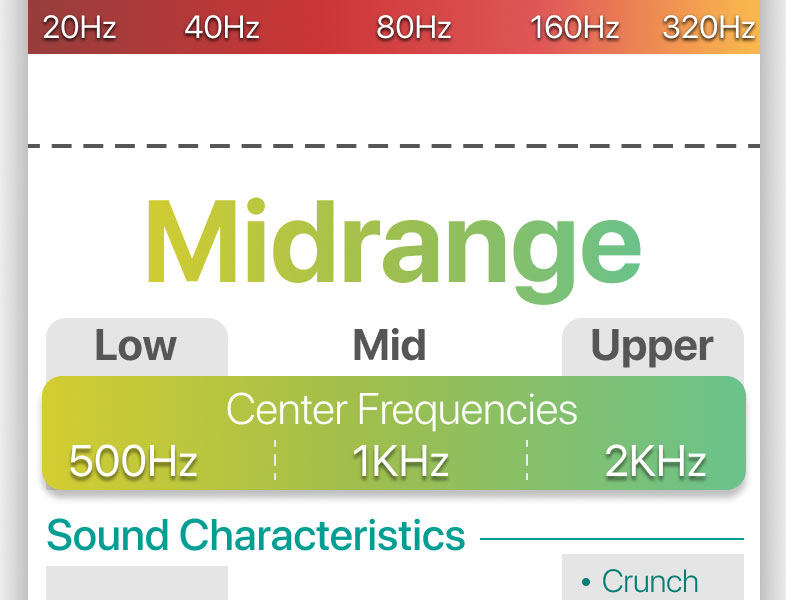
Bass: The four low octaves, with their centre frequencies below 250 Hz, are responsible for depth, weight, and physical presence.
A. SUB-BASS
• Center · Range: 31 Hz · 20–40 Hz
• Character: Weighty sound felt more than heard
• Common flaws in cheaper systems (avoided by WiSound): Rumble
• Found in: Kick drum, bass, organ
B. LOW BASS
• Center · Range: 63 Hz · 40–80 Hz
• Character: Depth, thud, fullness
• Common flaws in cheaper systems (avoided by WiSound): Boomy, loss of definition
• Found in: Kick drum, bass, piano
C. MID-BASS
• Center · Range: 125 Hz · 80–160 Hz
• Character: Body, weight
• Common flaws in cheaper systems (avoided by WiSound): Chesty, plummy, boomy, unclear
• Found in: Punchy bass, vocal fullness, toms attack, guitar & snare fullness, warm piano & horns
D. UPPER BASS
• Center · Range: 250 Hz · 160–320 Hz
• Character: Warmth
• Common flaws in cheaper systems (avoided by WiSound): Boxy, hollow, muddy
• Found in: Vocals, electric guitar, snare fullness; many acoustic instruments, brass, woodwinds, violins
Hear and share our BASS playlist on TIDAL and Spotify.
*Test your Headphones and Speakers with the Best Tracks, selected by Crystal Audio engineers, and based on ITU-R BS.1284-2 (01/2019) International Standard.

Natural & Pleasant Vocals
Hear midrange frequencies rich in information, delivering even the finest sonic details — for a perfectly balanced, natural listening experience.
Midrange / Vocals: The three midrange octaves, with centre frequencies between 250 Hz and 4 kHz, define the clarity and expressiveness of vocals and most musical instruments.
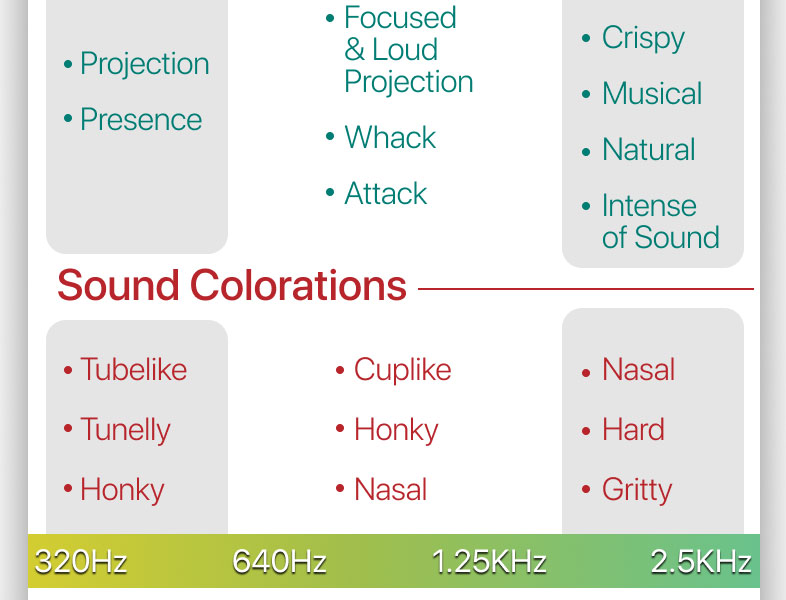
A. LOW-MID
• Center · Range: 500 Hz · 320–640 Hz
• Character: Projection, presence, texture and balance
• Common flaws in cheaper systems (avoided by WiSound): Tubelike, hollow, nasal
• Found in: Texture and balance, brass character on vocals, bassline clarity
B. MID-MIDRANGE
• Center · Range: 1 kHz · 640 Hz – 1.25 kHz
• Character: Focused projection, dynamic projection, attack
• Common flaws in cheaper systems (avoided by WiSound): Cuplike, honky, nasal, "phone effect"
• Found in: Snare attack, guitar and percussion, "phone effect" on vocals
C. UPPER-MID
• Center · Range: 2 kHz · 1.25–2.5 kHz
• Character: Crispness, liveliness, musicality, naturalness
• Common flaws in cheaper systems (avoided by WiSound): Nasal, hard, gritty
• Found in: Vocal articulation, guitar liveliness
Hear and share our MIDRANGE playlist on TIDAL and Spotify.
*Test your Headphones and Speakers with the Best Tracks, selected by Crystal Audio engineers, and based on ITU-R BS.1284-2 (01/2019) International Standard.

Crystal Clear Treble
Experience clear, crisp high frequencies without distortion — detail, brilliance, and a sense of air.
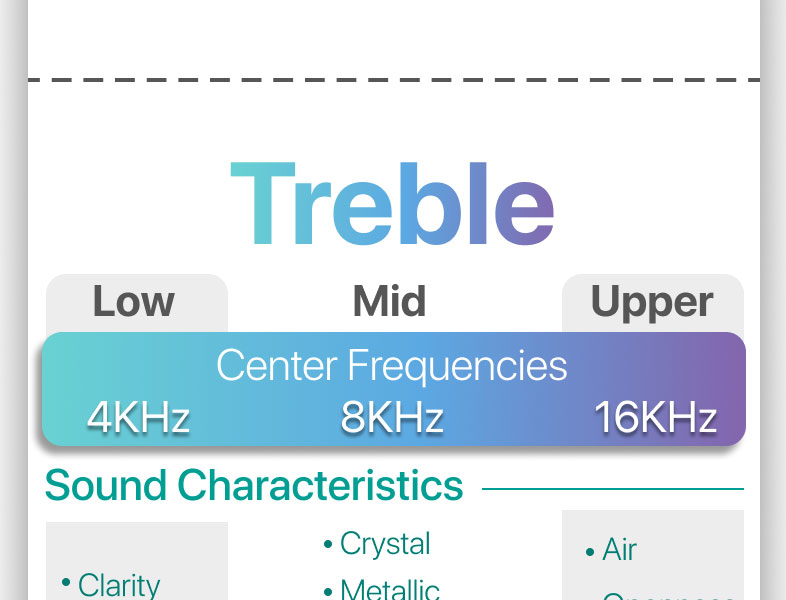
Treble: The three high octaves, with centre frequencies above 4 kHz, are responsible for clarity, brilliance, and the sense of air in sound.
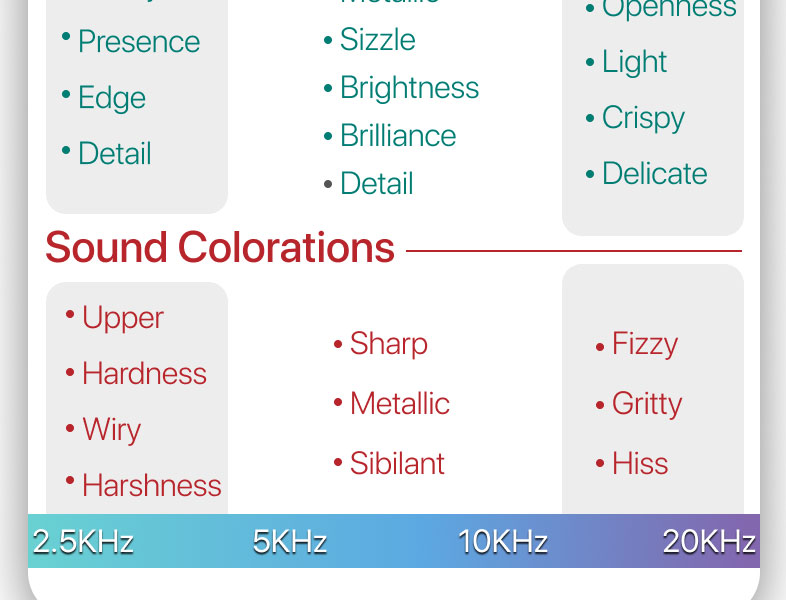
A. LOW-TREBLE
- Center · Range: 4 kHz · 2.5–5 kHz
- Character: Clarity, presence, edge, detail
- Common flaws in cheaper systems (avoided by WiSound): Hardness, wiry, harshness
- Found in: Vocal clarity and detail, toms attack, snare crispness, violin and piccolo harmonics, solo instrument clarity
B. MID-TREBLE
- Center · Range: 8 kHz · 5–10 kHz
- Character: Crystal, metallic tone, brilliance, detail, air
- Common flaws in cheaper systems (avoided by WiSound): Sharp, metallic, sibilant
- Found in: Cymbals, synths, metallic percussion, steel-string instruments, electric guitar air/sizzle
C. UPPER-TREBLE
- Center · Range: 16 kHz · 10–20 kHz
- Character: Air, openness, light, delicate
- Common flaws in cheaper systems (avoided by WiSound): Fizzy, gritty, hiss
- Found in: Hi-hat & cymbals; adds ambience to all sounds
Hear and share our TREBLE playlist on TIDAL and Spotify.
*Test your Headphones and Speakers with the Best Tracks, selected by Crystal Audio engineers, and based on ITU-R BS.1284-2 (01/2019) International Standard.
Premium Sound
Experience great audio, superb dynamic range, exceptional sound accuracy
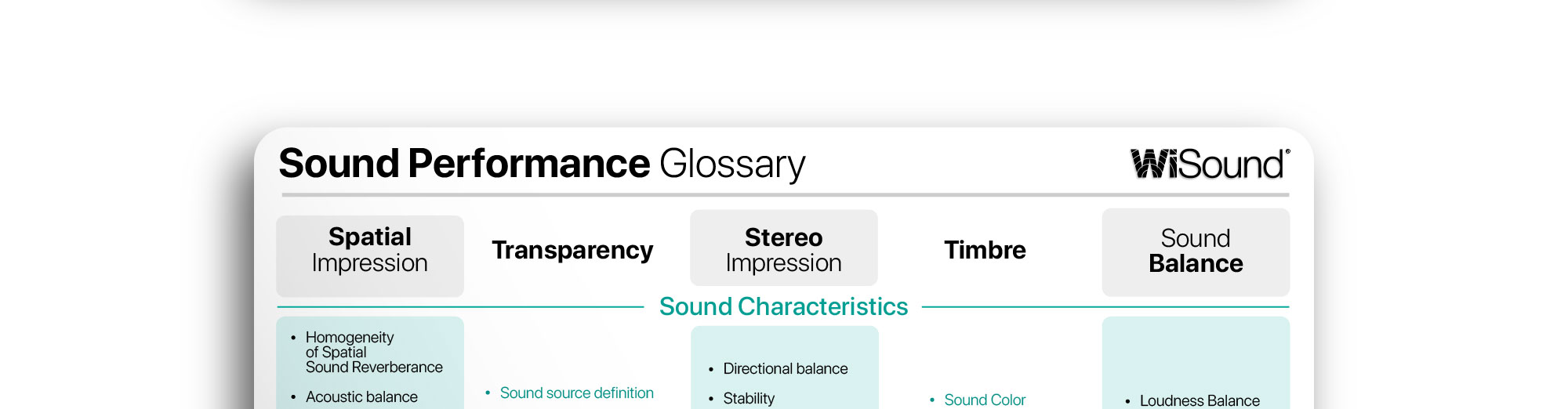
Enjoy your music, videos, and games! Test your headphones and speakers on every aspect of sound performance with the best tracks for: BASS, MIDRANGE, TREBLE, SPATIAL IMPRESSION, IMAGING, 3-Directional Soundstage Width, Depth, Height & Focus, SOUND BALANCE & Dynamics, TRANSPARENCY, Rhythm & Timing, TIMBRE, Attack & Decay.
Find and share our 9 PLAYLISTS on TIDAL and Spotify.
*Selected by Crystal Audio engineers, based on ITU-R BS.1284-2 (01/2019) International Standard for Sound Performance.
*Selected by Crystal Audio engineers, based on ITU-R BS.1284-2 (01/2019) International Standard for Sound Performance.
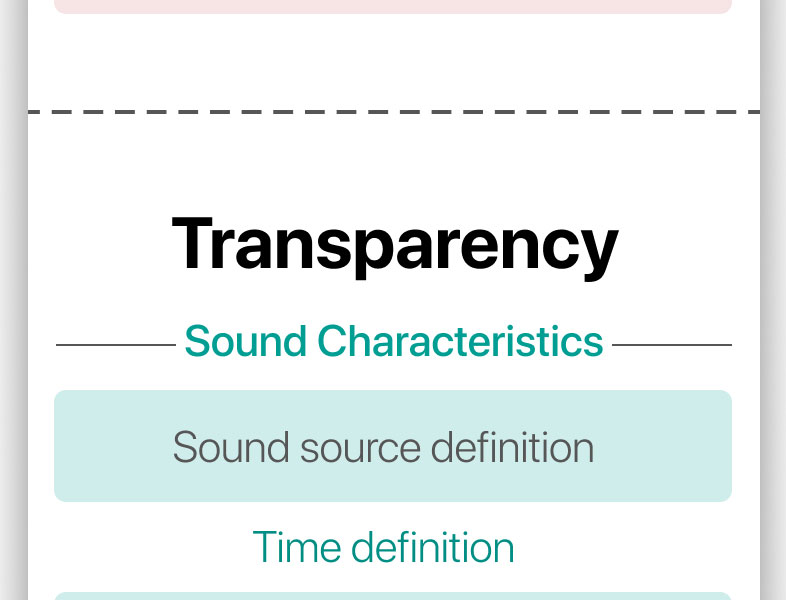
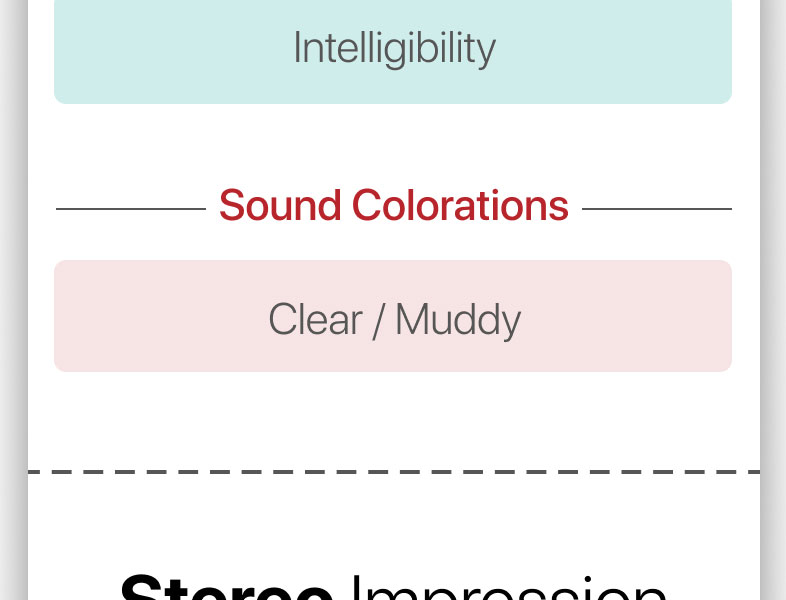
Transparency
The subjective impression that all details of the performance can be clearly perceived.
Experience Sound source definition, Time definition, Intelligibility.
Examples of common descriptive terms: Clear / Muddy.
Hear and share our TRANSPARENCY playlist on TIDAL and Spotify: crystalaudio.com/eur/playlists#transparency
*Test your Headphones and Speakers with the Best Tracks, selected by Crystal Audio engineers, and based on ITU-R BS.1284-2 (01/2019) International Standard.
Timbre
The subjective impression of the accurate portrayal of the different sound characteristics of the sound source(s).
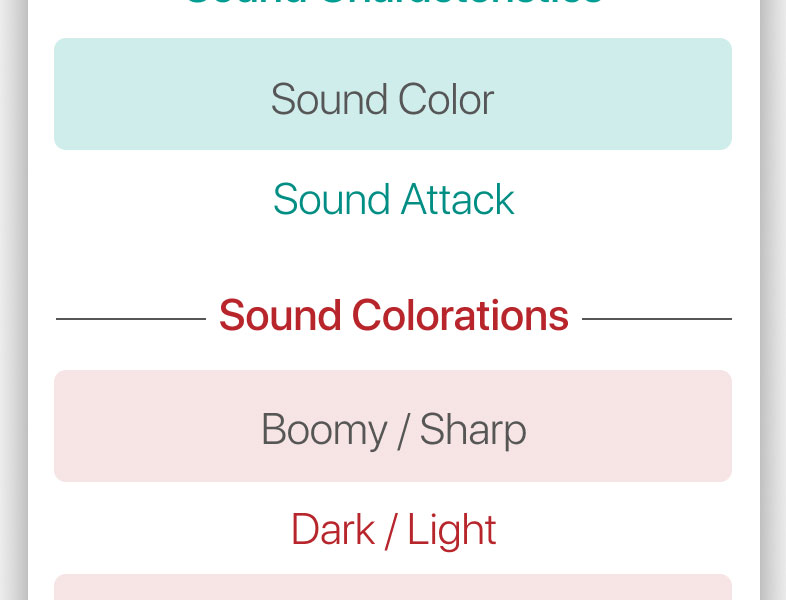
Experience Sound Color, Sound Attack.
Examples of common descriptive terms: Boomy / Sharp, Dark / Light, Warm / Cold.
Hear and share our TIMBRE playlist on TIDAL and Spotify: crystalaudio.com/eur/playlists#timbre
*Test your Headphones and Speakers with the Best Tracks, selected by Crystal Audio engineers, and based on ITU-R BS.1284-2 (01/2019) International Standard.
Sound Balance
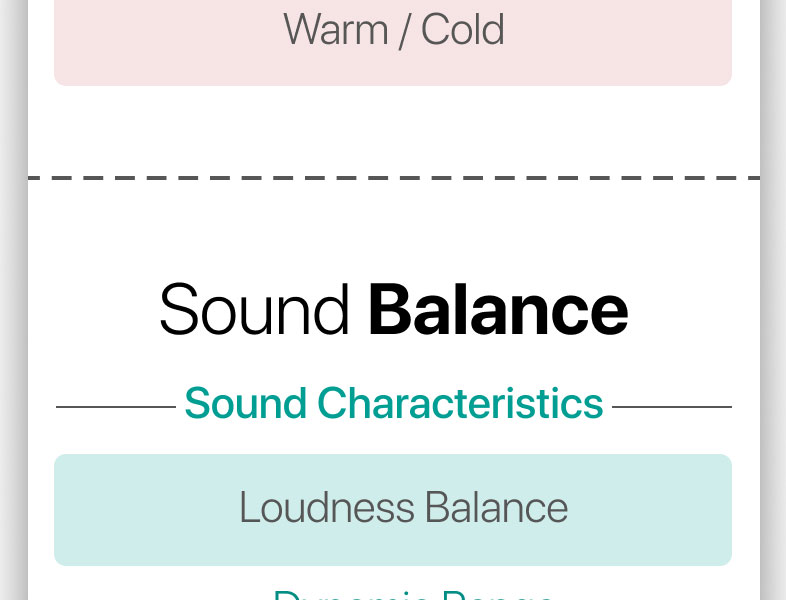
The individual Sound Sources appear to be properly balanced in the general Sound Image.
Experience Loudness Balance, Dynamic Range.
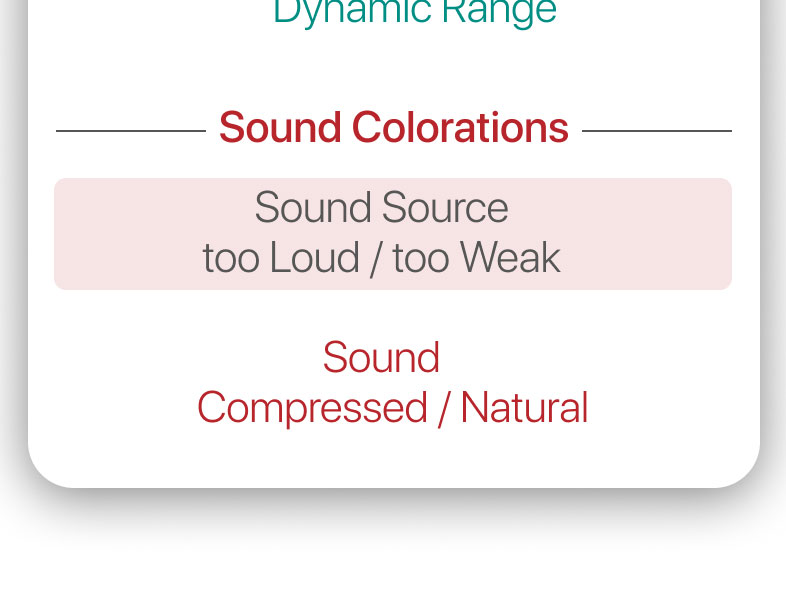
Examples of common descriptive terms: Sound source too loud / too weak; Sound natural / compressed.
Hear and share our SOUND BALANCE playlist on TIDAL and Spotify: crystalaudio.com/eur/playlists#sound-balance
*Test your Headphones and Speakers with the Best Tracks, selected by Crystal Audio engineers, and based on ITU-R BS.1284-2 (01/2019) International Standard.
Sound
- Channels 4.1.2
- Frequency Range 30Hz-20KHz
- Subwoofer 1x 20cm (8 in)
- Up-Firing Drivers 2 x 6.4cm (2.5in)
- Mid/tweeter 4 x 5.7cm (2.25in)
- Wireless Subwoofer
Power
- Maximum Power (Watt) 500
- Watts 250
- Subwoofer (WRMS) 150
- Woofer (WRMS) 2x20
- Mid/Tweeter (WRMS) 6x10
- Tweeter (WRMS) 4x15
Inputs
- Bluetooth Version 5.3
- HDMI (ARC)
- Optical Input
- USB Port
- RCA Input
- AUX input
General Features
- Dolby Atmos
- LED Display
- Remote Control
- Touch Controls
- Dimensions WxHxD (mm) 940x125x75 (SB) / 240x240x420 (SW)
- What's in the box (1) Product (2) User Manual (3) Remote Control (4) RCA Cable (5) Minijack 3.5mm Cable